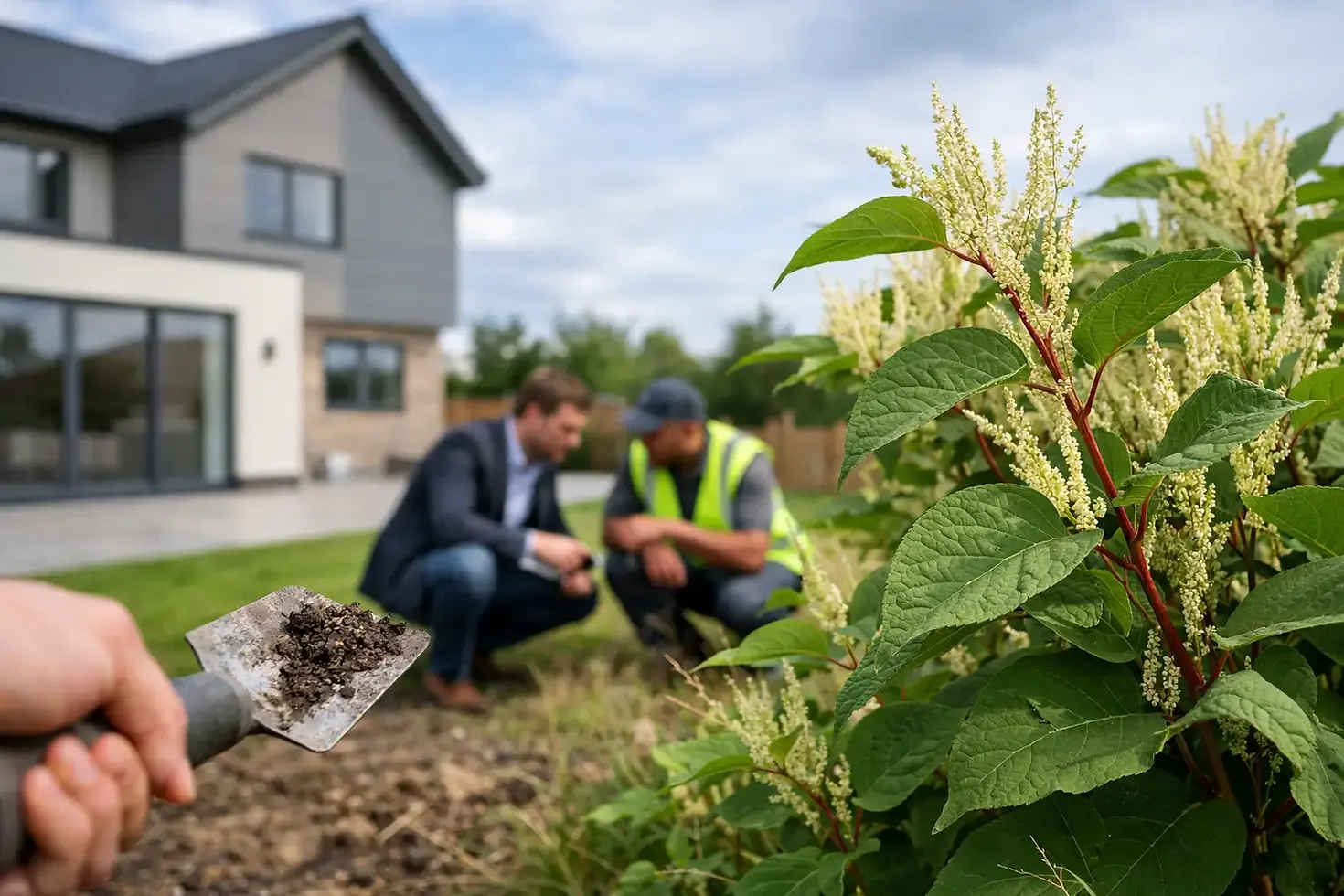
Knotweed Discovered After Completion - What Next?

You have the keys, the boxes are still half-packed, and then someone points at a stand of bamboo-like stems at the back fence. If you are facing the question of knotweed discovered after completion what next, the priority is not panic. It is getting the plant professionally identified, properly documented, and contained before it creates a bigger property, mortgage or neighbour dispute.
Finding suspected Japanese knotweed after you have completed a purchase is upsetting for a simple reason: by that stage, you assumed the main risks had already been uncovered. The right response is to move quickly, but not casually. Cutting it back, pulling it up, or asking a general gardener to clear it can make the problem worse and weaken your position if the issue later becomes part of a legal or insurance discussion.
Knotweed discovered after completion - what next first?
The first step is to confirm whether it is Japanese knotweed at all. Plenty of plants are misidentified, and the consequences of getting this wrong cut both ways. You do not want to ignore a genuine infestation, but you also do not want to make decisions based on guesswork.
A specialist survey is usually the safest starting point because it creates a formal record. That matters if you need to understand the extent of spread on your land, whether it appears to cross a boundary, and whether there is evidence that the issue existed before the sale. A proper survey should do more than say yes or no. It should include measured site observations, mapped areas of concern, boundary inspection, photographic evidence, and a written assessment that stands up in a property context.
Just as importantly, avoid disturbing the area. Japanese knotweed can spread when handled badly. Digging, strimming, fly-tipping or moving contaminated soil without a plan can increase cost and complexity. If the plant is near outbuildings, retaining walls, paving, drains or boundary lines, that risk needs to be assessed professionally rather than guessed at from a distance.
Why discovery after completion is treated differently
When knotweed is found during a purchase, the issue usually sits within conveyancing and mortgage checks. After completion, the focus changes. You now need to protect the property you own, establish the practical risk, and decide whether there may also be a misrepresentation issue linked to the sale.
That does not automatically mean someone hid it. Sometimes the seller did not know. Sometimes the growth was dormant or obscured. Sometimes a previous treatment programme existed but was not properly documented. And sometimes the plant is actually coming in from neighbouring land, which changes the picture again.
This is why evidence matters more than opinion. Before anyone starts talking about claims, compensation or blame, you need a clear, dated record of what is present now and where it is located.
What a specialist survey should give you
A useful knotweed survey is not just an identification visit. For buyers, owners, landlords and property managers, it should provide documentation you can act on. That means a written report, clear photographs, mapping and measured observations covering the garden, beds, boundary edges and neighbouring fence lines where visible.
Speed matters too. If you have just completed and there is concern about disclosure, boundaries or mortgage implications, waiting weeks for paperwork is rarely helpful. Rapid reporting gives you a firmer footing for whatever comes next, whether that is treatment, conversations with a neighbour, or legal advice.
For many owners, the real value is not just diagnosis but a route forward. Once the extent of infestation is documented, a structured treatment plan can be put in place with timescales, monitoring and the kind of formal paperwork lenders and solicitors expect to see.
Can you claim against the seller?
This is one of the first questions people ask, and the honest answer is that it depends on what was known, what was asked during the transaction, and what was disclosed. Property Information Forms and correspondence during the sale can become relevant, particularly if there is evidence that the infestation existed and should have been declared.
But it is easy to get ahead of yourself here. A suspected claim is not a substitute for expert evidence on site. If you are considering legal advice, a specialist survey report is often one of the first practical pieces of evidence you will need. It helps establish present condition, likely duration indicators, proximity to boundaries and whether there are signs of historic cutting, attempted removal or unmanaged spread.
Even if you do later explore a claim, you still need to deal with the plant itself. Leaving it in place while arguments drag on can expose you to further damage, complaints from neighbours and additional remediation cost.
What if the knotweed is coming from next door?
Boundary cases are common and often sensitive. You may have completed in good faith, only to find the main stand is rooted on adjoining land and encroaching beneath or through the boundary. In those cases, the practical goal is still the same: get evidence first.
A measured survey can show where visible growth is located and whether there are indications of spread towards your side. That gives you a factual basis for approaching the neighbouring owner. A calm, documented conversation is usually better than accusations. Many neighbour disputes escalate because people start with blame before they have proper evidence.
If the infestation is affecting your property, management should not be delayed simply because the source may be external. There may need to be parallel action - treatment planning on your side, while ownership and responsibility are clarified.
Why DIY removal is usually a false economy
Japanese knotweed is not a routine gardening problem. The visible canes and leaves are only part of the issue. Rhizome material below ground is what makes poor removal attempts so expensive. A quick cut-back can make a garden look tidier for a few weeks while doing nothing to resolve the actual infestation.
Worse, careless handling can spread contaminated material across the site. Disposal is not just a matter of filling green waste bags and hoping for the best. Excavation, movement and disposal need to be managed correctly. If the infestation sits near structures or boundaries, an unplanned approach can create avoidable cost and unnecessary disturbance.
Professional treatment plans work because they are structured over time. They are designed to suppress and control regrowth methodically, with documentation at each stage. For owners thinking beyond the immediate shock, that paperwork matters nearly as much as the treatment itself.
What treatment usually looks like
There is no single answer that suits every site. The right approach depends on the size of the infestation, location, access, surrounding structures, future plans for the property and whether there is pressure from a pending sale or refinance.
For many residential properties, a multi-year herbicide treatment programme is the most proportionate route. It manages the infestation over time and creates a clear paper trail. Where excavation or more immediate removal is necessary, the process becomes more complex and must be planned around access, waste handling and reinstatement.
This is where formal programmes give owners peace of mind. A five-year treatment plan with a 10-year insurance-backed guarantee is not just a service feature. It provides reassurance for future buyers, lenders and surveyors who want to see that the problem is being professionally controlled rather than informally managed.
What to do in the first week
If knotweed has been discovered after completion, the first week matters. Take clear dated photos, keep copies of your purchase paperwork, and arrange a specialist survey as soon as possible. Do not cut, dig, strim or try to dispose of anything from the affected area.
Once the survey is complete, read the report with two questions in mind. First, what is the actual physical risk to the property and boundaries? Second, what documentation do you now need for treatment, neighbour communication or legal advice? A good report should answer both.
For owners in London and the south of England, speed is often crucial because transactions, refinancing and disputes can move quickly. Japanese Knotweed Group is built around that reality, with formal surveys, next-day paperwork and treatment programmes designed to give property owners a documented route from discovery to control.
The mistake to avoid
The biggest mistake is treating knotweed as either a catastrophe or a cosmetic nuisance. It is neither. It is a property risk that needs professional assessment, proper records and a controlled response.
Some sites turn out to be manageable with a straightforward treatment plan. Others involve boundaries, historic non-disclosure or wider site impact. The point is that you do not need to know the full answer on day one. You do need to start the right process on day one.
Once you have accurate identification, mapped evidence and a clear treatment proposal, the situation becomes far more manageable. What feels like a nasty surprise starts to look like something with a plan behind it, and that is usually the moment the stress begins to ease.


Comments