Japanese Knotweed Treatment Plan With a 10 Year Insurance-Backed Guarantee

Japanese knotweed is a property problem that rarely stays hidden for long. A few reddish shoots in spring can become dense stems by summer, with underground rhizomes spreading beyond what is visible at the surface. Left unmanaged, it can affect garden use, building plans, sale timelines, and mortgage confidence.
A proper treatment plan does more than spray what can be seen. It identifies the full extent of the growth, chooses the right control method, records every visit, and gives future buyers, lenders, and insurers a clear paper trail.
That is where a 10-year insurance-backed guarantee matters. It gives the treatment plan long-term weight, especially when a property is being sold, refinanced, developed, or brought back into safe use.

A treatment plan starts with a proper survey
Japanese knotweed control should begin with a site survey, not guesswork. The visible plant is only part of the issue. The underground rhizome system can extend out from the main stand, and even small fragments can regrow if disturbed.
A survey should record:
The location and approximate area of visible growth
Any nearby hard surfaces, drains, walls, fences, or outbuildings
Whether the plant has crossed a boundary
Access limits for treatment equipment
Signs of previous cutting, digging, spraying, or burial
Risks linked to planned works, landscaping, or sale
The survey should also confirm whether Japanese knotweed is actually present. Other plants can look similar at certain stages, especially to the untrained eye. A mistaken identification can waste time and money, while a missed infestation can create bigger problems later.
A good written plan will include a marked site plan, photographs, and a clear explanation of the recommended method. This record becomes part of the evidence pack for solicitors, mortgage lenders, surveyors, insurers, and future owners.
For property transactions, that evidence can be just as valuable as the treatment itself. It shows the issue is being managed by a defined process rather than left as an open risk.
The right treatment method depends on the site
There is no single treatment method that fits every property. The right approach depends on the size of the infestation, where it sits, how soon the land must be used, and whether construction or excavation is planned.
Most treatment plans use one of three routes: herbicide treatment, excavation, or a managed combination.
Herbicide treatment suits many residential sites
Herbicide treatment is commonly used where the plant can remain in place while it is gradually controlled. The aim is to move treatment through the leaves and stems into the rhizome system.
This approach often takes several growing seasons. The plant may appear weaker each year, with shorter stems, smaller leaves, and fewer shoots. That does not always mean the rhizomes are dead, so monitoring still matters.
A typical herbicide plan may include:
Timed applications during the growing season
Follow-up inspections
Restrictions on cutting or disturbing treated areas
Final monitoring after visible growth has stopped
This method is often suitable for gardens, boundary areas, and places where immediate ground works are not needed.
Excavation is used when time or development matters
Excavation may be the better option when land is due to be built on, landscaped, sold quickly, or made fit for urgent use. It removes known contaminated material from the ground, either for disposal, treatment on site, or placement in a contained area where permitted.
This method needs careful planning because knotweed material can spread if handled badly. Soil movement, machinery tracks, skips, and vehicle tyres can all create risk if controls are poor.
Any excavation plan should cover:
The estimated depth and spread of contaminated ground
Biosecurity measures during works
Storage or disposal arrangements
Clean-down procedures for tools and machinery
Records of where material came from and where it went
Knotweed waste can be subject to strict handling rules in many jurisdictions. Disposal should follow local environmental requirements, especially where material leaves the site.

What a 10-year insurance-backed guarantee really means
A contractor guarantee and an insurance-backed guarantee are not the same thing.
A contractor guarantee is a promise from the treatment company that the Japanese knotweed will be managed under the agreed terms. If regrowth appears during the guarantee period, the contractor returns to assess and treat it, subject to the conditions of the plan.
An insurance-backed guarantee adds a separate layer of protection. It is designed to support the guarantee if the treatment company can no longer honour it, for example if it stops trading. The exact cover depends on the policy wording, provider, and conditions, so the detail matters.
A 10-year term is common because property transactions and lender concerns do not end when the first treatment visit is complete. Mortgage lenders, buyers, surveyors, and solicitors often want evidence that the issue will remain covered for a meaningful period.
The phrase Japanese Knotweed Treatment Plan With a 10 Year Insurance Backed Guarantee should mean a complete package, not a single visit and a certificate. It should include:
Initial survey and written management plan
Treatment or remediation works
Monitoring visits where required
Completion documentation
Guarantee documents
Insurance-backed guarantee paperwork
Clear conditions for what is covered and what is excluded
The paperwork should identify the property, the treated area, the guarantee period, and the party responsible for any future visits. It should also explain what happens if new growth appears.
Read the guarantee terms carefully. Many guarantees require the treated area to remain undisturbed unless the contractor approves the works. Digging, landscaping, installing services, removing soil, or building over the area without advice can affect cover.
This article is for general information only. Guarantee terms, legal duties, and lender requirements vary, so property owners should seek qualified advice for their own site and transaction.
Why lenders and buyers look for a documented plan
Japanese knotweed can slow down a sale even when the plant is already under control. The concern is not only the plant itself. Buyers and lenders want to know whether the risk has been properly identified, treated, and documented.
A clear treatment plan helps answer the questions that often arise during conveyancing:
Where was the knotweed found?
How close was it to buildings or boundaries?
Who confirmed the identification?
What treatment method was used?
How long will the treatment run?
Is there a guarantee?
Is the guarantee insurance-backed?
What happens if regrowth appears?
Without documents, buyers may assume the worst. A seller may say the plant was sprayed years ago, but that is hard to rely on without records. By contrast, a survey, plan, treatment logs, and guarantee create a trail that others can check.
This is especially useful where the property has changed hands, where a neighbour also has knotweed, or where building works are planned. It reduces uncertainty.
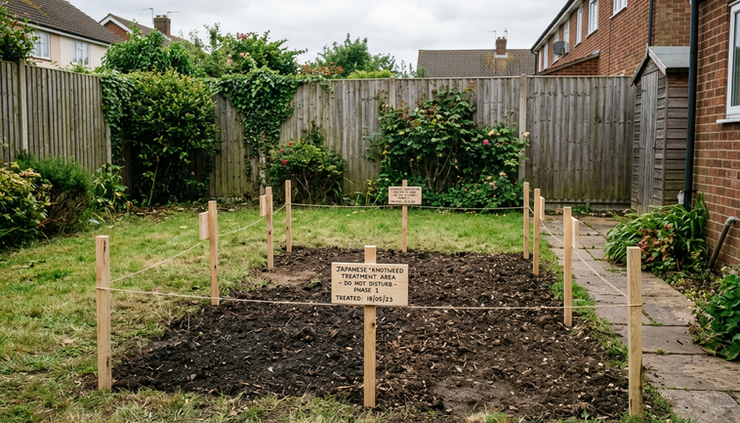
It also helps prevent accidental spread. A gardener, builder, or landscaper who knows where the treated area is can avoid digging through rhizome-contaminated ground. The plan becomes a practical site control, not just a legal file.
What to expect during the treatment period
A knotweed plan can take time, especially when herbicide treatment is used. The visible plant may reduce quickly, but the goal is long-term control of the rhizome system. That needs patience and careful follow-up.
During the plan, the treated area should usually be left alone unless the contractor gives written guidance. Cutting stems, digging roots, laying turf, moving soil, or covering the area can interfere with treatment and monitoring.
A well-managed programme should include clear communication at each stage. After each visit, the contractor should record what was found, what work was done, and what happens next.
Expect the following:
Seasonal timing
Treatment is usually planned around the plant’s growth cycle. Visits may be more useful when leaves are actively moving nutrients through the plant.
Visible changes
Growth may look weaker over time. Stems may become thinner, shorter, or distorted. This is a sign to monitor, not a reason to stop early.
Ongoing inspections
Monitoring helps catch regrowth before it becomes established. It also supports the guarantee record.
Completion evidence
At the end of the treatment phase, there should be written confirmation of the works completed and the status of the site.
A sound plan also explains what the owner should do if new shoots appear. The answer should not be panic, cutting, or digging. The right step is to photograph the growth, avoid disturbing it, and contact the treatment provider.
Choosing a contractor with care
The value of a guarantee depends on the quality of the company behind it and the clarity of the insurance backing it. A low-cost treatment with vague paperwork may create problems later, especially during a sale.
Before agreeing to work, check that the contractor can provide:
A written survey report
A clear treatment or remediation plan
Evidence of suitable insurance
A specimen guarantee document
Insurance-backed guarantee details
Treatment records after each visit
Practical advice for owners, tenants, or site workers
Ask how they decide between herbicide and excavation. A credible answer should relate to the site, not to a fixed package. Ask what is excluded from the guarantee, how regrowth is handled, and what actions could void the cover.
Also ask how the company manages biosecurity. The answer should include practical controls for tools, footwear, machinery, waste, and soil movement. Japanese knotweed spreads through plant material, so careless site practice can undo the benefit of treatment.
Choose a contractor who explains the limits as clearly as the benefits. No responsible company should promise instant permanent removal from a single spray visit. Strong treatment is measured by planning, records, follow-up, and accountability.

The real value is long-term confidence
Japanese knotweed is manageable when the response is structured. The problem grows when it is ignored, cut back without a plan, dug up casually, or hidden during a property transaction.
A treatment plan gives the work a clear route. A 10-year insurance-backed guarantee gives that route lasting support. Together, they help protect property value, reduce sale delays, and give future owners a clear record of what has been done.
The best next step is simple: get the plant properly identified, ask for a written plan, and make sure any guarantee is backed by clear insurance documents. Long-term confidence comes from proof, not promises.


Comments