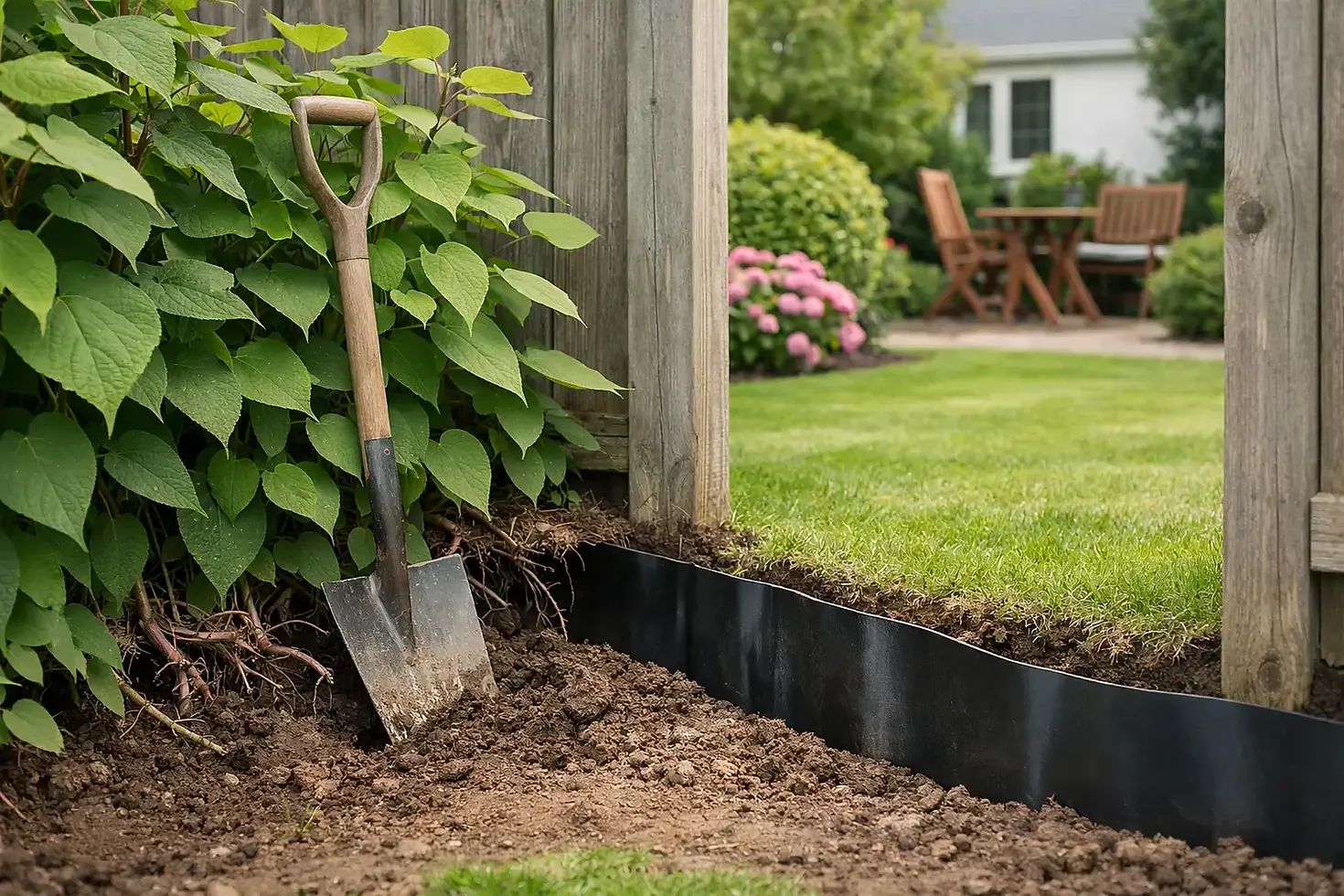
How to Stop Knotweed Spreading to Neighbours

A knotweed problem becomes far more serious the moment it reaches a boundary. If you need to stop knotweed spreading to neighbours, acting quickly is not just sensible garden maintenance - it is a matter of protecting property value, avoiding disputes and making sure the issue is properly documented from the outset.
Japanese knotweed does not respect fence lines, walls or informal understandings between neighbours. It can travel underground through rhizomes, emerge in adjoining land and create a difficult situation for both sides. For homeowners, landlords and commercial property managers, the real risk is not only the plant itself but the delay, uncertainty and potential liability that come with leaving it unchecked.
Why boundary knotweed needs a professional response
When knotweed sits close to a shared boundary, assumptions can be expensive. Many property owners believe cutting it back or digging out visible growth will solve the problem. In practice, that often makes matters worse. Disturbing the plant without a structured treatment plan can spread viable material across the site, contaminate soil and increase the chance of regrowth on your side or next door.
This is why a proper response starts with evidence. You need to know exactly where the infestation sits, how close it is to the boundary, whether there are signs of encroachment and what level of risk the site presents. A visual guess from the patio is not enough, especially if there is a sale, purchase, remortgage or neighbour concern in the background.
A formal survey gives you measured site observations, mapping and photographic records. That matters because boundary issues are rarely improved by uncertainty. Clear documentation helps establish the extent of the problem and supports the next step, whether that is treatment, monitoring or a more detailed management plan.
How to stop knotweed spreading to neighbours
The first priority is to stop disturbance. Do not strim it, mow it, pull it up or ask a general gardener to clear it away. Knotweed fragments can regenerate, and poorly handled waste creates another problem rather than removing the first one.
The next step is to arrange a specialist survey. A professional inspection should look beyond the obvious stems and leaves. It should assess beds, gardens, hardstanding, outbuildings, boundary lines and neighbouring fence lines, with measurements taken on site rather than estimated afterwards. If the infestation is close to adjoining land, the report should make that clear in a way that stands up during conveyancing or in any later dispute.
Once the infestation has been identified and recorded, treatment should be planned around control and containment. In some cases, herbicide treatment over a structured multi-year programme is the most practical route. On other sites, excavation and removal may be necessary, particularly where development works are planned or the infestation is extensive. The right option depends on the site layout, access, timing and how far the rhizome network may already have spread.
The important point is that the approach must be deliberate. To stop knotweed spreading to neighbours, you need more than a quick fix. You need a documented process that reduces risk now and continues to do so over time.
What not to do near a boundary
The most common mistake is informal clearance. Property owners often try to tidy the area before selling, before a surveyor visits or after a neighbour complains. That impulse is understandable, but knotweed is not a plant that rewards cosmetic action.
Digging into the area can spread contaminated soil. Cutting it repeatedly can stimulate dense regrowth. Moving soil, composting cuttings or placing waste in general garden refuse can create compliance and disposal issues. Even laying membranes over the top without understanding the root extent can leave rhizomes active below ground.
There is also a paperwork issue. If the matter later becomes part of a property transaction, a buyer, lender or solicitor will want evidence of what was found and how it has been managed. Informal DIY work rarely provides the reassurance they need.
Why a survey matters before treatment starts
On a boundary case, speed matters, but so does accuracy. A professional survey should do more than confirm the presence of knotweed. It should show where it is, how far it extends, what structures or boundaries are nearby and whether the visible growth is likely to represent a wider below-ground issue.
For many owners, that report is the turning point. It replaces worry with something usable: written findings, photographs, mapped locations and measured observations. If you are dealing with a neighbour concern, preparing for a sale or trying to protect a long-term asset, that level of detail is what allows decisions to be made confidently.
A structured survey product is also useful because it moves the issue into a formal process quickly. Where paperwork is turned around promptly, you are not left waiting for basic confirmation while the growing season continues or a transaction stalls.
Treatment plans and guarantees reduce future risk
Knotweed control near neighbouring land should never be framed as a one-off tidy-up. The aim is not to make the area look better for a fortnight. The aim is to manage the infestation in a way that is measurable, defensible and capable of giving future reassurance.
That is why longer-term treatment plans matter. A five-year treatment programme allows the site to be managed over the timescale knotweed requires rather than the timescale a property owner might prefer. That may feel slower than a quick clearance, but it is often the more dependable route for residential and commercial sites where evidence, continuity and lender confidence matter.
An insurance-backed guarantee adds another layer of protection. For owners planning to sell, refinance or retain the property as an investment, this is often the difference between a vague promise and credible risk management. It tells buyers and professionals that the issue has been addressed within a formal framework, not pushed into the background.
If your neighbour has raised concerns
Boundary complaints are stressful because they mix plant control with property rights and personal relationships. The best response is usually the calmest and most practical one. Avoid arguing over what the plant might be or where it may have come from before a specialist has assessed it.
Instead, arrange a survey and keep communication factual. Once you have written findings, you can deal with the issue on evidence rather than assumption. If knotweed is confirmed, a treatment plan shows that you are taking reasonable and timely steps to manage it. That is usually far more helpful than making verbal assurances you cannot support.
If you are the one buying a property and you suspect encroachment from next door, the principle is the same. Ask for formal inspection rather than relying on estate agent descriptions or neighbour opinion. A proper report is what protects you later.
When urgency is highest
Some situations call for immediate specialist input. If knotweed is within a few metres of a boundary, visible on both sides of a fence, interfering with a sale, or causing concern from a lender or solicitor, delay rarely helps. The same applies if previous cutting, digging or disposal has already taken place and you no longer trust the condition of the area.
Property owners across London and the surrounding counties often need clarity fast because transactions do not wait. In those cases, next-day paperwork and a clearly defined survey scope are not just convenient. They help prevent drift at the exact point where drift becomes expensive.
Japanese Knotweed Group works in that practical window: identify the problem, inspect it properly, document it clearly and move into a treatment plan that gives the owner a defensible way forward.
The best way to protect your property and your boundary
If your goal is to stop knotweed spreading to neighbours, treat it as a property risk from day one, not a gardening nuisance. The strongest position is always the same - get the site inspected, get the evidence in writing and follow a treatment plan designed for the reality of knotweed rather than the hope that it will fade away.
A boundary problem does not improve with guesswork. It improves when you replace uncertainty with a measured survey, formal reporting and a treatment programme that protects both the land and the people who depend on it. That first decisive step is often the one that restores peace of mind.


Comments