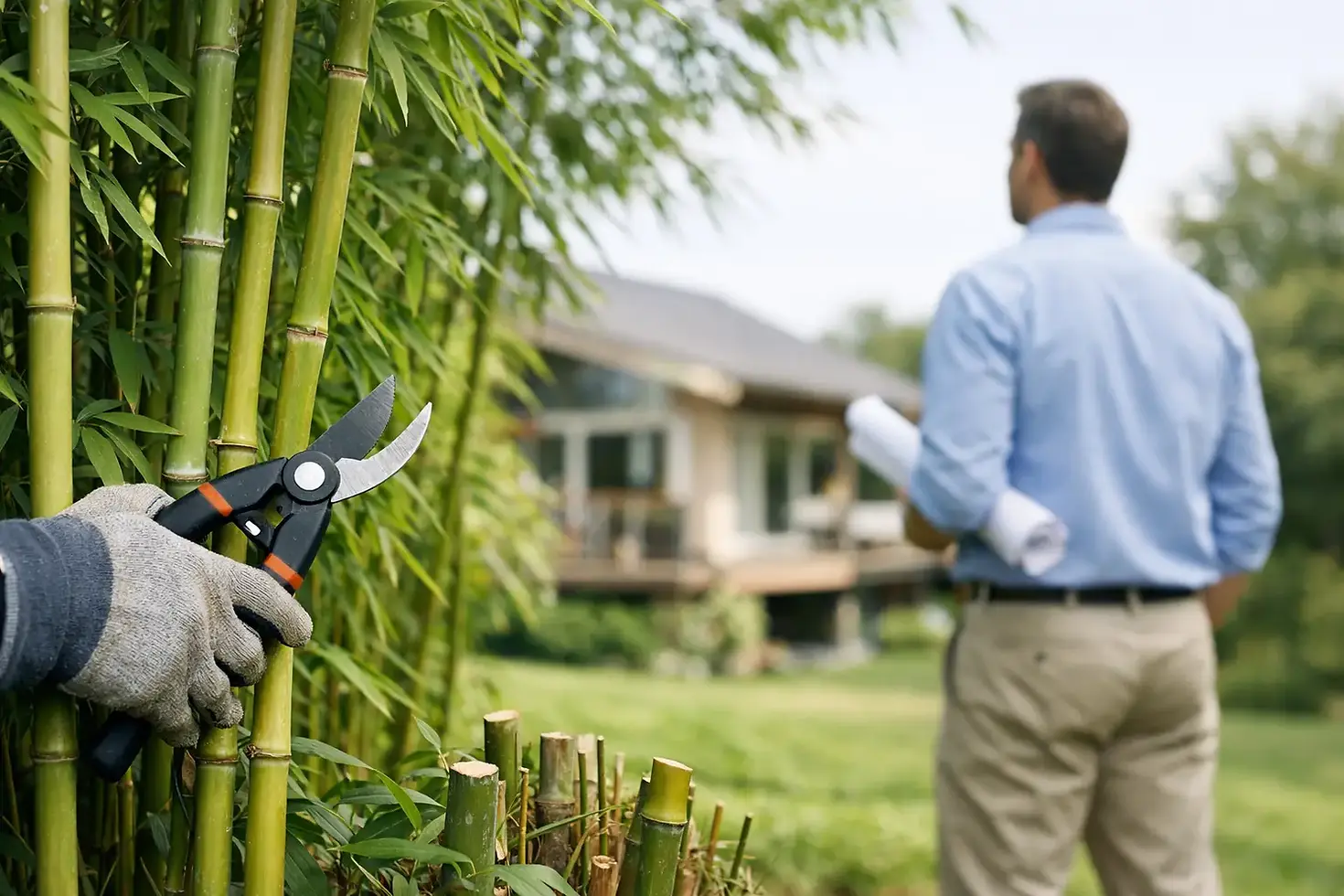
Bamboo Treatment for Property Owners

Bamboo treatment becomes urgent the moment it stops looking ornamental and starts pushing into paving, beds, fence lines or a neighbour’s garden. For property owners, this is not simply a planting issue. Left unchecked, spreading bamboo can create boundary disputes, damage hard landscaping and raise awkward questions during a sale.
Unlike Japanese knotweed, bamboo is not classed as an invasive non-native species in the same way, but that does not make it low risk. Running bamboo in particular can travel aggressively through rhizomes below ground, appearing several metres away from the original planting. If you are buying, selling or managing a property, the real question is not whether bamboo looks attractive. It is whether it is contained, documented and under control.
When bamboo treatment is actually needed
Not all bamboo requires the same response. Clumping varieties tend to stay compact and are usually far easier to manage. Running varieties are the problem species on most domestic and commercial sites. They spread underground, exploit weak points in borders and can emerge through lawns, gravel, paths and neighbouring beds.
Treatment is usually needed when bamboo has moved beyond its intended area, when new canes are appearing where they should not, or when there is evidence of encroachment across a boundary. It also matters when bamboo is close to structures, retaining walls, outbuildings or paved surfaces. In these cases, delay often makes the job larger and more expensive.
Bamboo treatment options depend on the site
There is no single bamboo treatment that suits every property. The right approach depends on the species, the age of the stand, how far the rhizomes have spread and what sits nearby. A small patch in open ground may be manageable with repeated control. A mature stand tight against a boundary or patio often needs a more decisive approach.
For light to moderate cases, a treatment plan may combine cutting back top growth with repeated herbicide application at the right point in the growing cycle. This can weaken the plant over time, but it rarely delivers a fast fix. Bamboo stores energy in its rhizome network, so partial work often leads to regrowth rather than resolution.
Where bamboo has spread widely, excavation is usually the more reliable option. That means locating and removing rhizomes from the affected area, not just clearing visible canes. If any viable sections remain in the ground, the problem can return. This is why property owners often underestimate the scale of what looks like a simple garden clearance job.
Why DIY bamboo treatment often falls short
The common mistake is to cut bamboo down and assume the issue has gone. In reality, the underground network remains active. New shoots may not appear immediately, which creates false confidence, especially during a sale or after a quick tidy-up before marketing a property.
Another problem is incomplete excavation. Rhizomes can be tough, brittle and difficult to trace through compacted soil, borders and built features. Disturbing them without removing them properly can spread the problem further across the site. Where boundaries are involved, poor handling also increases the risk of dispute with adjoining owners.
Professional assessment matters most where evidence and clarity are important. If bamboo is affecting value, prompting buyer questions or creating concern about neighbouring land, informal reassurance is rarely enough. A measured site inspection and written findings provide a far stronger basis for decisions.
Survey first, then choose the right treatment
A proper site survey removes guesswork. It helps confirm whether the plant is running or clumping bamboo, records how far it has spread and identifies risks around paving, garden structures, boundary lines and adjacent land. That matters because treatment without mapping is often treatment without control.
For property transactions and managed sites, documented evidence is especially useful. Photographs, site measurements and a clear written report help show what is present, where it sits and what action is recommended. If removal is necessary, that recommendation should also account for safe disposal and the practicalities of restoring the affected area afterwards.
This is where a specialist process gives peace of mind. Japanese Knotweed Group Ltd works with property owners who need fast clarity, formal reporting and a structured route from survey to treatment plan. Even when the plant in question is not knotweed, the same principle applies: identify the risk properly, document it clearly, and choose a control strategy that stands up to scrutiny.
Bamboo treatment and property value
Bamboo does not carry the same lending stigma as Japanese knotweed, but unmanaged spread can still affect buyer confidence. Surveyors, solicitors and cautious purchasers may raise concerns if there is visible encroachment near boundaries or hard landscaping. If there is a history of neighbour complaints, the issue becomes more than cosmetic.
For landlords, commercial owners and property managers, the risk is practical as well as financial. Uncontrolled growth can lead to repeated maintenance costs, complaints from occupiers and avoidable reinstatement work. Early action is usually cheaper than waiting until excavation is extensive.
What to do next if bamboo is spreading
If bamboo is moving beyond the area where it was planted, treat it as a property management issue rather than a gardening chore. Start with identification and site assessment. That tells you whether monitoring, repeated treatment or full excavation is the sensible route.
The key is to act before spread reaches neighbouring land or starts affecting surfaces and structures. Once bamboo becomes a documented problem in a transaction or dispute, delays rarely make it easier to resolve.


Comments