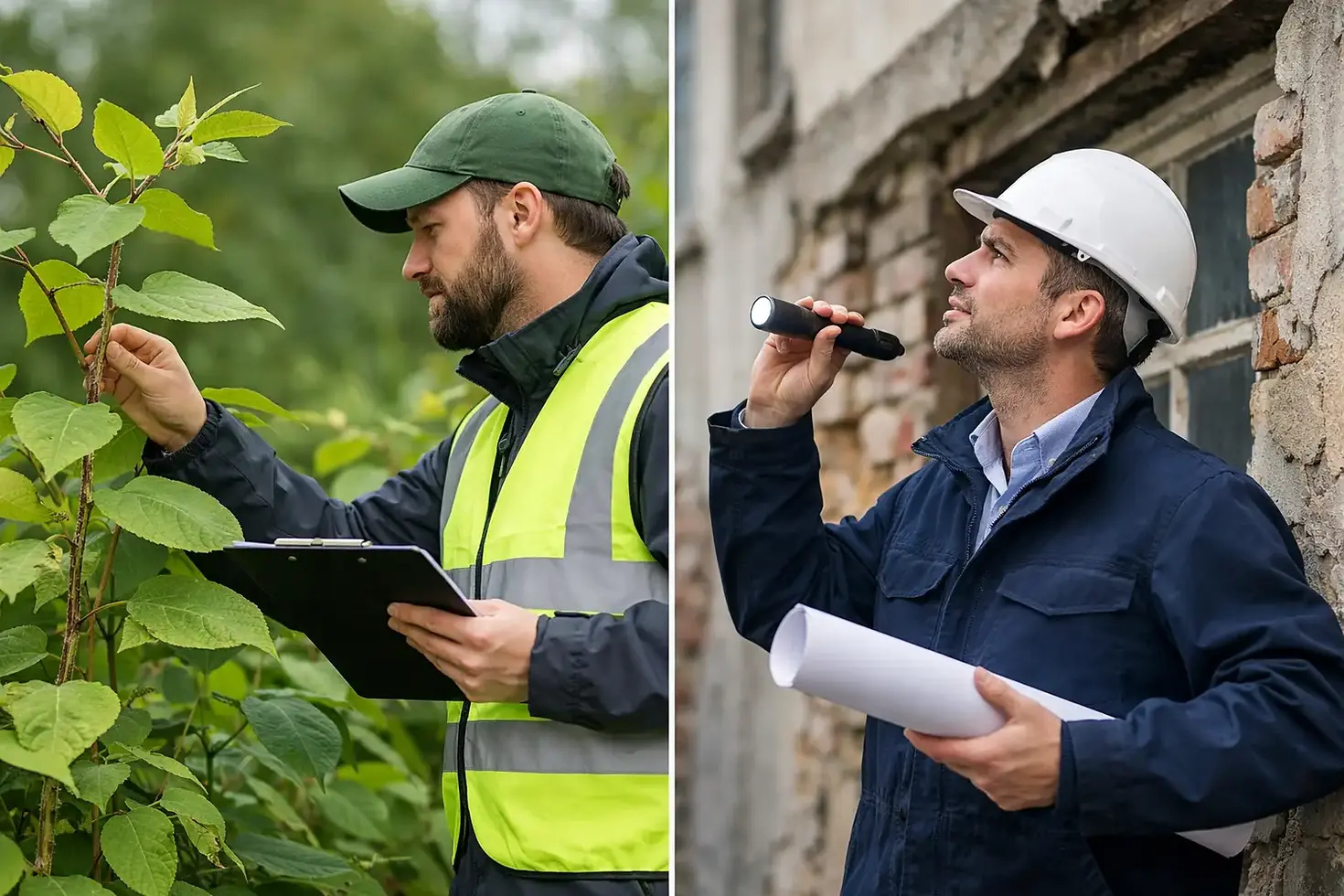
Knotweed Surveyor or Builder Inspection?

Knotweed surveyor vs builder inspection - what is the difference?
When a buyer spots suspicious growth near a boundary, or a seller is asked awkward questions during conveyancing, the wrong inspection can cost weeks. In some cases, it can cost a sale. That is why the question of knotweed surveyor vs builder inspection matters more than many property owners realise.
A builder can tell you whether cracking, lifting or drainage issues are visible. A knotweed surveyor is there to establish whether Japanese knotweed is present, where it is, how far it has spread, what risk it poses, and what documented action should follow. Those are not the same job.
If your concern is mortgage approval, formal risk evidence, neighbour disputes or a treatment plan that can be relied on later, a builder inspection is not usually enough on its own. It may be useful, but it is not a substitute for a specialist survey.
What a builder inspection is designed to do
A builder inspects buildings. Their focus is the fabric of the property, visible defects and repair needs. If there is damage to paving, drains, retaining walls, outbuildings or hard landscaping, a builder may be well placed to comment on what needs repairing and what that repair could involve.
That can be helpful where Japanese knotweed is suspected of contributing to visible problems. For example, if patio slabs have lifted or a garden wall appears under pressure, a builder may identify the practical building implications. They may also flag vegetation that looks concerning.
But this is where the limitation starts. Builders are not typically engaged to produce mortgage-ready invasive plant reports. They do not usually map rhizome spread, record measured site observations around beds and boundaries, assess neighbouring fence lines, or set out a structured, multi-year treatment programme with formal documentation behind it.
In short, a builder can often tell you that something is wrong. A knotweed surveyor is there to confirm what it is and what needs to happen next.
What a knotweed surveyor is expected to provide
A specialist knotweed survey is focused on identification, extent, evidence and next steps. That matters because Japanese knotweed is not simply a gardening problem. It is a property risk issue, and property risks need clear records.
A proper survey should look beyond the obvious canes in the garden. It should cover the wider site in a measured way, including beds, boundary lines and areas where growth may be coming from a neighbouring property. It should also provide a written report that is detailed enough to support decision-making, whether you are buying, selling, managing a site or dealing with an insurer.
At Japanese Knotweed Group Ltd, the survey product is built for exactly that purpose. It includes a detailed written report, around 20 photographs, mapping and measured observations, with next-day paperwork to help keep transactions moving. That is a different level of documentation from a general building visit or informal opinion.
Why formal documentation matters so much
The biggest mistake people make is assuming that seeing a tradesperson on site is the same as having evidence. It is not.
In property transactions, the question is not only whether someone has looked at the issue. The question is whether the outcome of that visit stands up when a lender, solicitor, buyer or property manager asks for proof. A verbal view from a builder may reassure you personally, but it often does very little when paperwork is needed.
A specialist knotweed report gives you a dated record of findings, photographic evidence, mapped areas of concern and a basis for treatment recommendations. If no knotweed is found, that can be equally valuable. If it is present, the report helps move the conversation from uncertainty to a defined management plan.
This is particularly important where property value, saleability or disclosure obligations are involved. Vague notes and casual observations tend to create more questions. Formal surveys answer them.
Knotweed surveyor vs builder inspection in a property sale
If you are selling a property, speed and clarity matter. Buyers do not like uncertainty, and lenders dislike it even more. Once Japanese knotweed enters the conversation, people want evidence quickly.
A builder inspection may help if there is already obvious damage and you need repair input. But if the core issue is whether knotweed exists, how serious it is, and whether there is a credible treatment route in place, a specialist survey is usually the first step.
The same applies if you are buying. Relying on a builder’s passing comment can leave you exposed later. If the growth turns out to be knotweed and there is no formal survey, you may face treatment costs, disputes with neighbours and difficult questions about whether the issue should have been identified earlier.
For buyers and sellers alike, specialist reporting reduces uncertainty. It gives everyone involved something concrete to work from.
When a builder inspection still has value
This is not a case of one professional being useful and the other not. It depends on the problem you are trying to solve.
If the building fabric has already been affected, a builder may need to assess repairs to walls, paving, drains or structures after the knotweed issue has been identified. Their role can be especially helpful once treatment is underway or complete and remedial works need pricing or scheduling.
There are also cases where a builder is the first person on site and sensibly advises the owner to get a specialist knotweed survey. That is good practice. The problem comes when a non-specialist opinion is treated as a final answer.
So the real choice is not always builder or surveyor. Often, the better sequence is surveyor first for identification and risk evidence, then builder if repair advice is needed.
What to look for in a specialist knotweed survey
Not all inspections are equal. If you are paying for a professional survey, it should produce something usable.
A worthwhile report should clearly state whether Japanese knotweed is present or suspected, where it is located, how the site was assessed and what action is recommended. Photographs should be more than token images. Mapping should be specific enough to show affected areas and nearby risks. Measured observations should cover the practical places that matter, including gardens, beds, boundaries and adjacent fence lines.
Just as important is what happens after the survey. If knotweed is confirmed, you need a route forward that is structured and credible. A treatment plan spread over time, with clear milestones and a long-term insurance-backed guarantee, gives far more reassurance than a one-off suggestion to "cut it back" or "keep an eye on it".
That is the dividing line between proper risk control and guesswork.
Why quick action usually saves money and stress
People often delay because they hope the growth is harmless, or because they think a builder can deal with it as part of general garden or repair work. That delay can make things worse.
If knotweed is present, early identification gives you more control. You can document it before a sale becomes urgent, before neighbour tensions rise, and before a lender asks for information you do not yet have. You also avoid wasting money on the wrong type of visit.
A specialist survey is usually a small cost compared with the financial impact of a stalled transaction, a disputed boundary issue or ineffective removal work. The real value is not just in being told what the plant is. It is in getting a documented position and a practical next step.
So which inspection should you book?
If your main concern is Japanese knotweed itself, book a specialist survey. If your main concern is repairing confirmed physical damage after the knotweed issue has been assessed, a builder may then have a role.
For most property owners, buyers, landlords and site managers, the risk starts with uncertainty. Is it knotweed? How far does it go? Will this affect a mortgage, a sale, a neighbour or future value? A builder inspection does not usually answer those questions in the level of detail the situation demands.
A knotweed survey does. It turns suspicion into evidence, and evidence into a treatment pathway.
If you are dealing with a time-sensitive sale or a worrying patch of growth, the safest move is the one that gives you paperwork, measurements, photographs and a clear plan. Peace of mind comes from knowing exactly what you are facing and having the right specialist behind you.


Comments