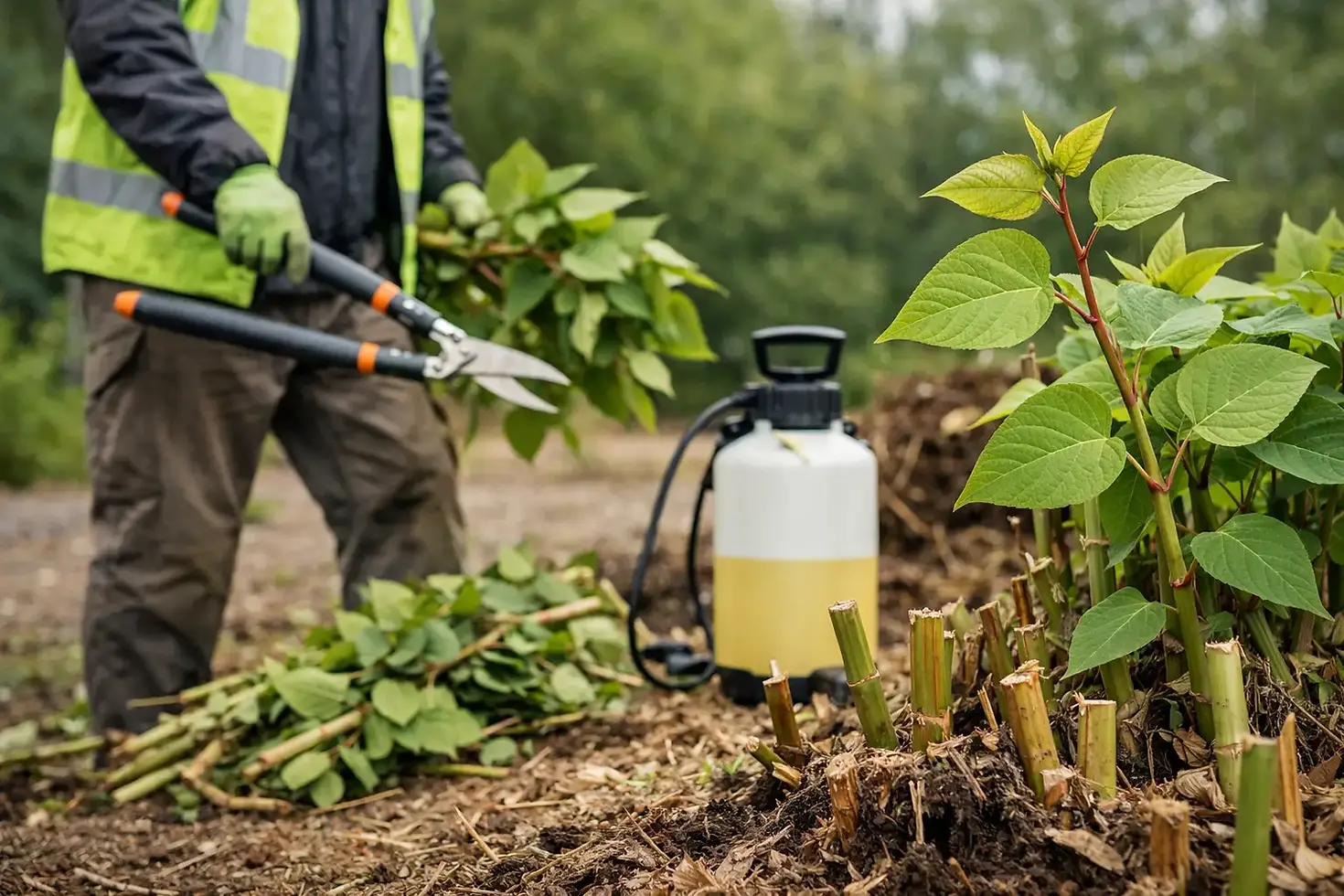
Japanese Knotweed Removal Treatment Plan

If Japanese knotweed has appeared on your land, the real problem is not just the plant itself. It is the risk it creates around property value, mortgage approval, neighbour disputes and future liability. That is why Japanese knotweed removal and a Japanese knotweed treatment plan should start with formal evidence, not guesswork.
For many owners, the first instinct is to cut it back or dig it out. That often makes matters worse. Japanese knotweed spreads through its rhizome system below ground, and even small fragments can allow regrowth. A patch that looks minor at surface level may already extend beneath lawns, beds, paths or boundary lines. In a property sale, that uncertainty is exactly what causes delay.
Why a survey comes before Japanese knotweed removal
Effective treatment starts with knowing what is present, where it is spreading and how far the risk extends. A proper on-site survey gives you a recorded position from day one. That matters whether you are a homeowner trying to protect your garden, a buyer needing clarity before exchange, or a landlord managing risk across a portfolio.
A specialist survey should do more than confirm identification. It should document the site in a way that stands up during conveyancing, mortgage checks and ongoing management. That means measured observations, mapped areas, clear notes on gardens and beds, inspection of boundary lines and neighbouring fence lines, and photographic evidence that shows the infestation in context.
This is where speed matters as much as accuracy. If a sale is moving or a lender has raised concern, waiting weeks for paperwork is not practical. A defined survey product with a written report, mapping and next-day paperwork gives owners something they can actually act on.
What a Japanese knotweed treatment plan should include
Not all infestations need the same response. Some sites are suitable for a herbicide-led management programme over several growing seasons. Others may require excavation, professional removal and controlled disposal, particularly where development works, access constraints or severe spread make long-term treatment less suitable.
A credible Japanese knotweed treatment plan should set out the method, timescale and expected site management in plain terms. It should also explain what happens next, rather than simply recommending treatment and leaving the owner to work out the rest.
In most residential and commercial cases, the strongest approach is a structured multi-year plan. That gives the infestation time to be treated properly, monitored consistently and recorded at each stage. A five-year interest-free treatment plan offers a practical route for owners who need risk controlled without a large upfront burden, while still keeping the process formal and accountable.
Removal is not just about killing the plant
Japanese knotweed removal is often discussed as though it were routine gardening work. It is not. The risks include disturbance of contaminated soil, accidental spread during excavation, poor disposal practice and weak paperwork that does not satisfy buyers or lenders.
Professional removal means the work is controlled from survey through to disposal. If excavation is necessary, waste handling must be managed safely and lawfully. If treatment rather than excavation is the right route, the programme should still be documented with site records and follow-up inspections. The point is not only to suppress growth. It is to protect the asset.
That distinction matters when a property is being sold or refinanced. Buyers and lenders usually want reassurance that the issue has been identified, assessed and placed under a formal management process. Verbal assurances are rarely enough. A written report and a treatment framework backed by a long-term guarantee carry far more weight.
Why guarantees matter in property transactions
A treatment plan without a guarantee may still control the plant, but it does less to reduce wider property risk. Owners, purchasers and conveyancers want to know there is a recognised route from identification to remediation, with evidence behind it.
A 10-year insurance-backed guarantee provides that extra layer of reassurance. It shows that the issue is not being handled casually or temporarily. It also helps when confidence is low, especially in transactions where knotweed has already caused alarm.
For first-time buyers, that guarantee can make a complex problem feel manageable. For property professionals, it supports due diligence and future file records. In both cases, formal documentation is what turns a stressful discovery into a controlled process.
The fastest route to peace of mind
The most useful next step is usually the simplest one: arrange a specialist survey, get the written findings quickly, and move straight into the right treatment recommendation for the site. A survey from £199 plus VAT, supported by a detailed report, around 20 photographs, mapping and measured observations, gives owners a practical starting point instead of uncertainty.
For properties in London and the surrounding counties, Japanese Knotweed Group Ltd positions that process around speed and clarity - survey first, next-day paperwork, then a structured treatment plan with dedicated support. That is what most owners need when a plant problem becomes a property problem.
If knotweed is affecting your land, waiting rarely improves the position. The sooner the site is assessed and documented, the sooner you can replace uncertainty with a treatment plan that protects both the property and the people responsible for it.


Comments