Knotweed Monitoring Visits Explained Clearly

A patch of Japanese knotweed does not stop being a property risk the day treatment starts. That is usually the point where lenders, buyers, landlords and owners want proof that the problem is being controlled properly. That is where knotweed monitoring visits explained in plain terms becomes useful - because these visits are not a formality. They are the evidence trail behind a credible treatment programme.
If you are selling, buying or managing a property, monitoring visits show whether treatment is working, whether regrowth is appearing where expected, and whether the site remains on track against the management plan. For many owners, that record matters just as much as the initial herbicide application.
What knotweed monitoring visits actually are
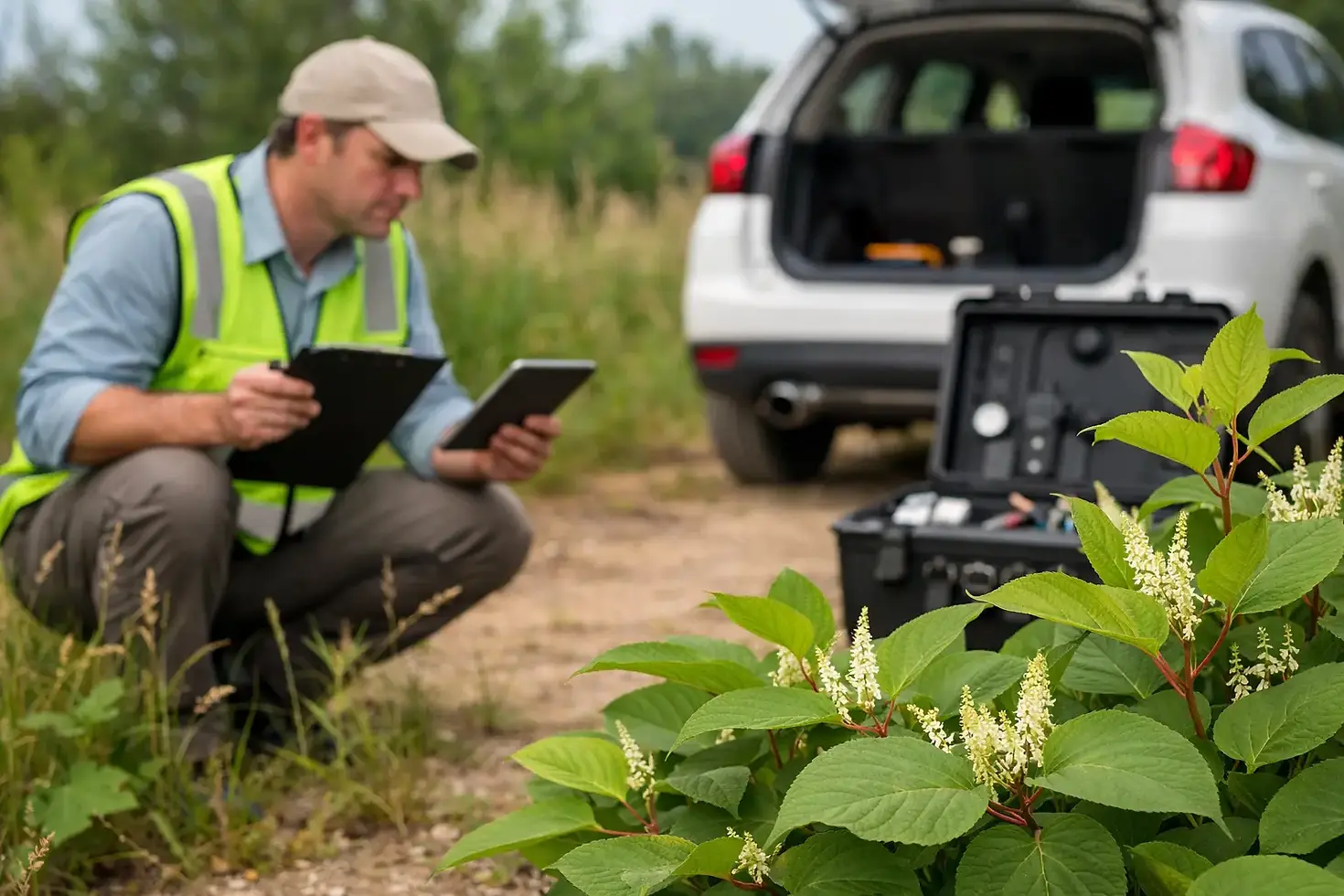
A monitoring visit is a scheduled inspection carried out after treatment has begun. The purpose is to assess the condition of the infestation, record any visible regrowth, check the spread area against previous findings, and confirm whether the treatment plan needs to continue as scheduled or be adjusted.
This is not the same as a first survey. An initial survey establishes what is present, where it sits on the site, how close it is to buildings and boundaries, and what level of risk it presents. Monitoring happens afterwards. It tracks progress over time.
In practice, that means measured observations, up-to-date photographs, notes on cane density and vitality, and comparison against earlier records. If the infestation was mapped during the original inspection, the monitoring visit helps confirm whether the affected area is reducing, stabilising or showing fresh activity.
Why monitoring matters after treatment starts
Japanese knotweed rarely resolves through a single visit. Even on straightforward sites, treatment is a managed process rather than a one-off event. The plant’s rhizome system can persist below ground, and visible growth patterns change with the seasons. What looks quiet in winter may show clear regrowth in spring.
That is why structured follow-up matters. Without monitoring, there is no reliable way to demonstrate that a treatment programme is active, appropriate and effective. For homeowners, that creates uncertainty. For sellers, it can slow enquiries. For buyers and lenders, it can raise questions about whether the issue has been professionally managed.
Good monitoring also protects against false reassurance. A site can appear improved at surface level while retaining live underground material. Equally, a small amount of regrowth does not always mean failure. In many cases it is an expected part of the process, and the value of monitoring lies in knowing the difference.
Knotweed monitoring visits explained in real property terms
For most people, the practical question is simple: what does this mean for my property?
It means you have a documented record that the infestation has not been ignored. It means there is a specialist assessment of how the site is responding. It means that if a buyer, surveyor or solicitor asks for evidence, you are not relying on verbal assurances or old photographs.
This becomes especially important where knotweed sits near a garden boundary, outbuilding, retaining wall, extension or neighbouring land. In those cases, monitoring is not just about the plant itself. It is about managing the wider property risk, showing that spread is being checked, and demonstrating that the site is under professional supervision.
For landlords and property managers, the benefit is similar but broader. Monitoring creates a compliance trail. If tenants report regrowth or neighbouring owners raise concerns, there is already a formal record of inspections, observations and action taken.
What happens during a monitoring visit
A proper monitoring visit should be systematic. The specialist attends the site, revisits the known infestation area and compares current conditions against the original survey and previous inspection notes.
They will usually assess visible growth, the extent of dieback, the health and density of canes, and whether any activity is appearing beyond the previously identified zone. Boundaries matter here. If knotweed was originally noted along a rear fence line or close to adjoining land, that area should be checked carefully.
Photographic evidence is an important part of the process. Clear, dated images help create continuity from one visit to the next. Measurements and mapping may also be updated where needed, particularly if the growth pattern has changed or the original extent requires refinement.
If herbicide treatment forms part of the management plan, the visit may include the next scheduled application, depending on timing and seasonal conditions. If it is purely an inspection point, the main output is the record itself - what was found, whether progress is satisfactory, and whether any change to the plan is required.
How often are monitoring visits needed?
That depends on the site, the treatment method and the stage of the programme. There is no honest one-size-fits-all answer.
Some sites need close seasonal attention, especially in the early years of treatment. Others may follow a more spaced schedule once the infestation is responding as expected. Time of year matters as well. Knotweed is easier to assess during active growth periods than during full winter dieback, although winter inspections can still be useful for checking site condition and planning the next phase.
The key point is that visits should follow a structured management programme, not happen on an ad hoc basis. A five-year treatment plan with defined monitoring points gives owners something far more valuable than occasional attendance - it gives them a defensible process.
What records should you expect?
When monitoring is handled properly, the paperwork should be clear enough to stand up to scrutiny. That means more than a brief note saying the site was visited.
A strong record usually includes the inspection date, site observations, updated photographs, reference to the known infestation area, and confirmation of whether the treatment programme remains on course. If there is regrowth, the record should say so. If no significant regrowth is visible, that should be stated plainly as well.
For transaction purposes, clarity matters. Buyers, solicitors and lenders are not looking for vague reassurance. They want evidence that the issue has been identified, documented and monitored under a formal plan.
This is where a specialist service makes a real difference. A detailed initial survey with mapped observations, measured site notes and photographic evidence creates the baseline. Monitoring visits then build on that baseline, making each stage easier to verify.
What monitoring visits do not do
Monitoring is essential, but it is not a shortcut. It does not mean the knotweed has disappeared overnight, and it does not replace the need for a proper initial survey.
It also does not mean every trace of regrowth is a crisis. Knotweed treatment often involves controlled suppression over time. A small return of growth may be expected and manageable within the agreed plan. What matters is whether that regrowth is being tracked, treated and documented correctly.
There is also a difference between monitoring and excavation. Some sites are suited to herbicide-led management with ongoing visits. Others may require removal and licensed disposal, particularly where development, significant groundworks or immediate risk factors are involved. The right approach depends on the property and the objective.
Why buyers and sellers should pay attention
Where Japanese knotweed has already been identified, the question in a sale is rarely just, “Has treatment started?” More often it is, “Can the seller show this is being professionally managed?”
Monitoring records help answer that. They demonstrate continuity. They show that the issue has not gone cold after the first contractor visit. They also reduce the chance of late-stage surprises when paperwork is reviewed during conveyancing.
For buyers, that means a clearer view of the risk they are taking on. For sellers, it helps protect the transaction from doubt and delay. If a management plan is backed by a long-term guarantee, monitored progress becomes even more valuable because it supports confidence in the wider remediation framework.
Choosing a provider for ongoing monitoring
If you need monitoring, look for a specialist that treats it as part of a documented risk-management process, not a casual garden inspection. The quality of the original survey, the standard of record-keeping and the structure of the treatment plan all affect how useful those later visits will be.
A provider that offers formal site surveys, prompt written reporting, photographic evidence, measured observations and a defined multi-year plan is usually better placed to deliver monitoring that helps in real-world property situations. That is particularly relevant if you are dealing with lenders, buyers or managing a portfolio where documentation must be clear and consistent.
Japanese Knotweed Group Ltd works in exactly that way, with survey reporting designed to support treatment decisions and longer-term control rather than leaving owners with unanswered questions after the first inspection.
If you are facing a knotweed issue, the most helpful next step is rarely to wait and see. It is to make sure the site is surveyed properly, the treatment plan is structured, and every monitoring visit adds to a record that protects your property position over time.


Comments