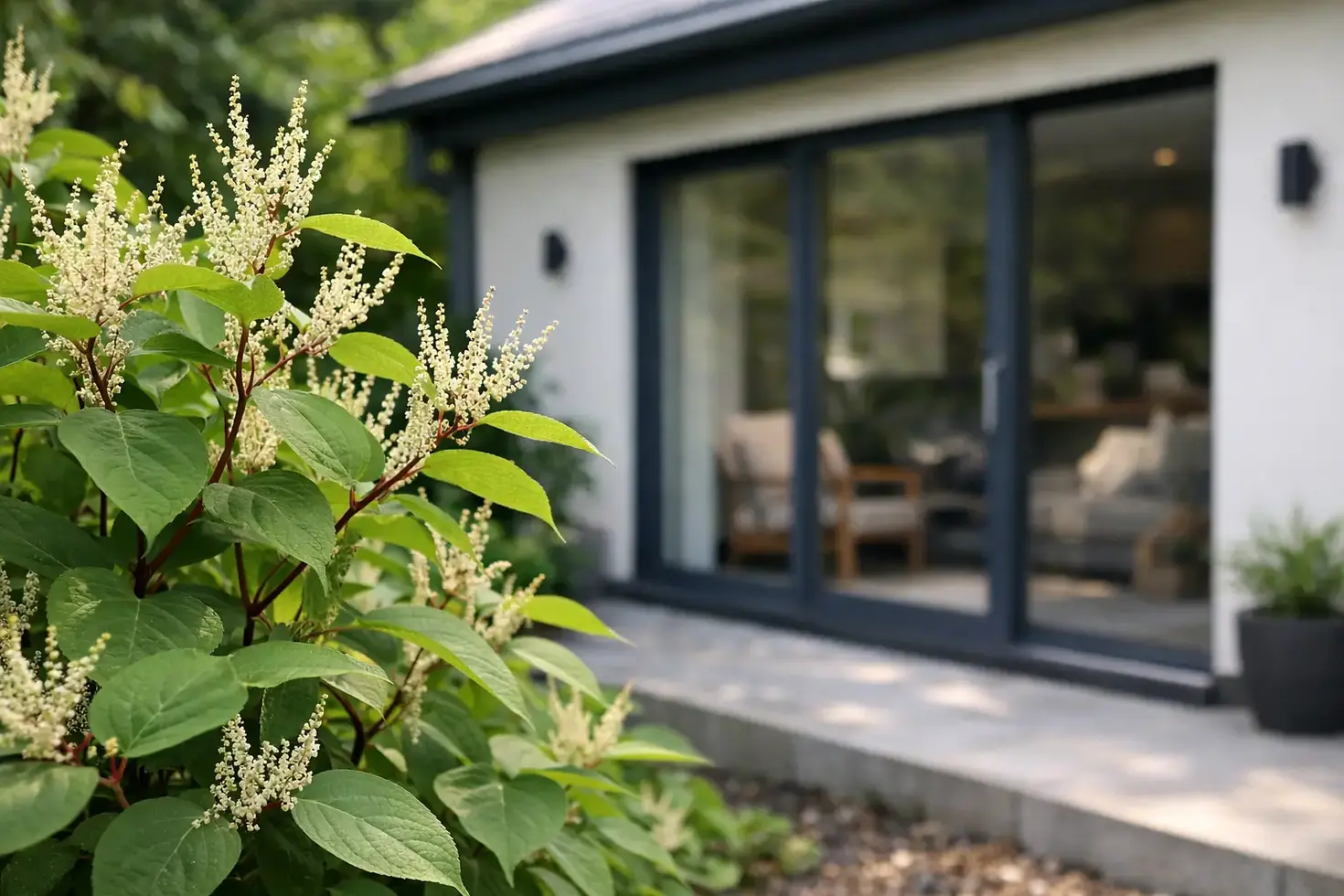
Japanese Knotweed Near Extension: What Now?

Spotting Japanese knotweed near extension is the sort of discovery that can derail a calm property decision in a few minutes. If it is growing close to an added room, kitchen extension, conservatory base or rear wall, the question is rarely just about the plant itself. It is about risk - to the structure, to future saleability, and to any mortgage or conveyancing process that may already be under way.
The good news is that this is a problem best handled with facts, measurements and proper documentation, not guesswork. Distance from the structure matters. So do the construction type, the route of rhizome spread, neighbouring land and whether the growth is active, historic or already subject to treatment. What matters most is getting the position confirmed quickly by a specialist who can assess the site properly.
Why Japanese knotweed near extension causes concern
An extension is often more vulnerable than the original house simply because it may involve lighter structures, shallower elements, drains, retaining edges, patios and service routes that are easier for invasive growth to exploit. That does not mean every case leads to structural failure. It does mean the risk needs to be measured rather than dismissed.
Japanese knotweed is not a plant to treat like an overgrown shrub. Its underground rhizome system can spread beyond the visible canes, and the obvious growth you see in spring or summer may only show part of the affected area. When that spread reaches areas beside an extension, surveyors will want to understand how close it is to foundations, slabs, walls, drainage runs, paths and boundary features.
For homeowners, the stress usually comes from uncertainty. People want to know whether the extension is already affected, whether they must declare the issue when selling, and whether immediate removal is necessary. Those are sensible questions, but they cannot be answered by photos alone or by a general gardener taking a look over the fence.
Is knotweed actually damaging the extension?
This is where nuance matters. Japanese knotweed does not behave like a root system that punches through sound concrete by force alone. The more common issue is that it exploits weaknesses that already exist - cracks, joints, gaps around drains, edging details and poorly built or lightly built structures. Older patios, outbuildings, garden walls and conservatory bases can be especially vulnerable.
If the extension is modern, well built and in good condition, the immediate structural risk may be lower than many homeowners fear. But lower risk is not no risk. The plant can still affect adjacent hardstanding, drainage, boundaries and future property transactions. A buyer, lender or surveyor is unlikely to be reassured by guesswork if visible knotweed sits close to the rear addition.
Where an extension sits near the boundary, another complication often appears. The knotweed may not originate on your land at all. It may be spreading from a neighbouring garden, railway embankment or unmanaged strip. In those cases, you still need the extent recorded properly, because legal responsibility, treatment planning and disclosure all depend on clear site evidence.
What a specialist survey should assess
When Japanese knotweed near extension is reported, the priority is to replace worry with measured site data. A proper survey should not stop at confirming the plant species. It should document where the growth is, how far it extends, what structures sit nearby and whether neighbouring land is involved.
That means measured observations across gardens, beds, boundaries and fence lines, together with photographic evidence and mapping. The aim is not just to say that knotweed is present. The aim is to create a written record that can be used in a property decision, treatment plan or conveyancing file.
This is particularly important if you are buying a house and the seller has mentioned historic treatment, or if a mortgage valuation has raised the issue without giving a clear next step. A fast, formal report can make the difference between a manageable delay and a prolonged dispute.
Distance matters, but context matters too
Many people search for a single rule about how many metres from an extension is acceptable. Real sites are not that simple. Surveyors consider proximity, but they also look at whether the growth is mature, whether there is evidence of previous cutting or disturbance, whether there are signs of spread beneath hard surfaces, and how the extension itself is constructed.
A small stand of knotweed several metres away may be less concerning than disturbed regrowth tucked against a boundary wall beside a conservatory base. Equally, dead-looking canes do not prove the problem has gone away. Dormancy and prior herbicide use can reduce visible growth while rhizomes remain in the ground.
What not to do if you find it near an extension
The worst first move is usually to start digging. Disturbing Japanese knotweed can spread contaminated material across the garden and make a contained issue harder and more expensive to manage. It can also complicate disposal, because plant material and affected soil may need controlled handling.
Cutting it back without a treatment plan is not much better. You may tidy the appearance for a week or two, but you also remove evidence that helps a specialist assess the extent and condition of the infestation. If a sale is pending, that can create unnecessary questions later.
Trying to deal with it as ordinary garden waste is another mistake. Disposal has to be handled correctly. For property owners, that is one more reason to bring in a specialist service rather than treating it as routine maintenance.
Survey first, then treatment
A clear process matters here. First confirm whether it is actually Japanese knotweed, where it is growing and how close it is to the extension and other structures. Then move to a treatment recommendation based on evidence rather than assumptions.
For many sites, professional herbicide treatment over a managed period is the right route. It is often more proportionate and less disruptive than immediate excavation, especially where the aim is long-term control backed by documentation. In other cases, excavation and disposal may be necessary, particularly if redevelopment is planned or if the infestation is heavily affecting built elements.
What property owners usually need is not a dramatic one-off intervention. They need a treatment plan that can be explained to buyers, lenders and solicitors, with formal paperwork to support it. That is why structured multi-year programmes and insurance-backed guarantees carry real value. They show the problem is being managed professionally, not ignored.
Why paperwork is as important as treatment
If knotweed is close to an extension, the issue is rarely confined to the garden. It can affect a remortgage, a sale, a purchase negotiation or a dispute over disclosure. A verbal opinion from a contractor will not help much in those settings.
A proper report should give you written findings, mapped areas, measured observations and photographic evidence. Fast turnaround matters too. If you are midway through a transaction, waiting weeks for confirmation can be as damaging as the infestation itself.
This is where a specialist service earns its keep. Japanese Knotweed Group Ltd provides on-site surveys from £199 plus VAT, followed by a detailed written report with 20 photographs, mapping and measured observations, then a 5-year interest-free treatment plan where needed and a 10-year insurance-backed guarantee. That kind of structure gives owners and buyers something solid to work with.
Buyers and sellers: how to handle the issue calmly
If you are buying, do not assume the extension is unsound because knotweed is nearby. Equally, do not let anyone brush it aside without evidence. Ask for a specialist survey and written report. That gives you a basis for deciding whether the risk is minor, manageable or significant.
If you are selling, speed and transparency are usually your best protection. A documented survey and treatment recommendation can prevent the situation turning into suspicion later. Buyers are far more likely to proceed when there is a formal plan in place with clear evidence and a recognised guarantee.
Landlords and commercial owners have a similar priority. They need a record that shows the issue has been identified, assessed and put into a managed programme. That protects the asset and reduces the chance of future disputes about neglect or spread.
When to act urgently
You should move quickly if the knotweed is visibly close to the extension wall, pushing through paving, appearing near drainage points, or spreading from a neighbouring property towards built areas. Urgency also increases if a sale, purchase or remortgage is already in motion.
Acting quickly does not mean rushing into the wrong treatment. It means booking a specialist survey quickly enough to establish the facts while the issue is still containable. Next-day paperwork can be extremely helpful when lenders, valuers or solicitors are waiting for answers.
The most useful next step is often the simplest one: get the site inspected, get the measurements recorded, and get a written report you can rely on. Once you know exactly what sits near the extension and what risk it creates, the path forward becomes much clearer - and usually much less alarming than the uncertainty that came first.


Comments