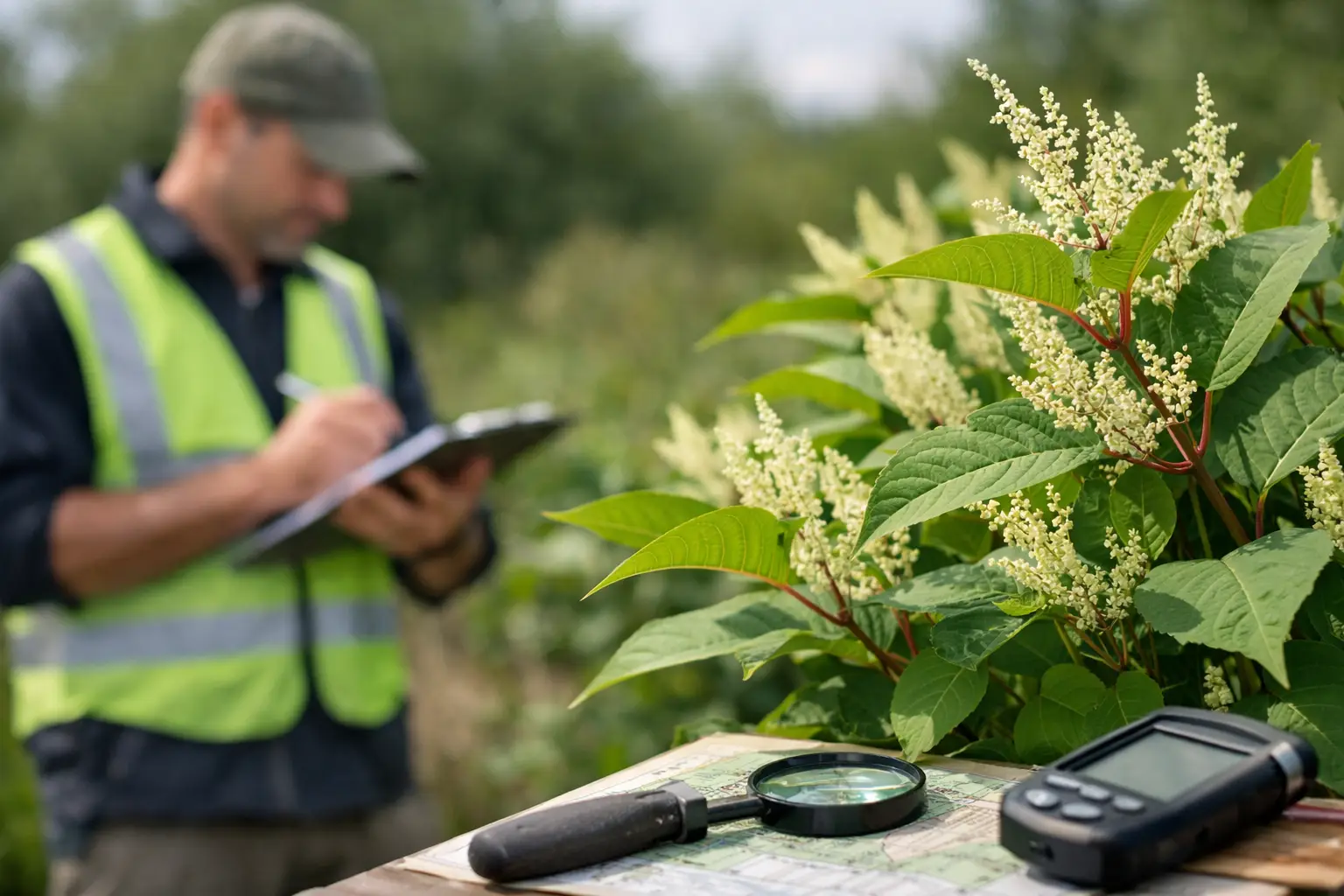
Is a Japanese knotweed survey a must-have?

Spotting suspicious bamboo-like stems in a garden is bad enough. Finding them during a sale, purchase, or refinance is worse. In that situation, a Japanese knotweed survey is a must-have survey because guesswork is what causes delays, disputes, and loss of confidence from buyers, lenders, and neighbours.
This is not simply a question of identifying a plant. It is about proving what is present, where it is growing, how far it has spread, and what needs to happen next. For property owners, landlords, and site managers, that proof matters far more than a casual opinion.
When a Japanese knotweed survey is a must-have survey
There are times when a survey moves from useful to essential. If you are selling a property and knotweed is suspected, a formal survey can prevent a buyer from assuming the worst. If you are buying and want certainty before exchange, it gives you documented evidence rather than reassurance based on photographs or estate agent comments.
It is also vital when a mortgage lender, surveyor, solicitor, or managing agent has raised concerns. The same applies if knotweed appears close to a boundary line, near outbuildings, retaining walls, patios, drains, or neighbouring land. In these cases, the issue is not only whether the plant is present, but whether there is a measurable risk that needs professional management.
A proper survey is equally important for properties that may have been miss-sold. If an infestation was not disclosed, or was poorly handled by a previous owner, formal reporting helps establish the current condition of the site and the next practical steps.
What a proper survey should give you
Not all surveys are equal. A worthwhile Japanese knotweed survey should do more than confirm suspicion. It should create a record that stands up to scrutiny.
That means written findings, clear site observations, measurements, mapping, and photographic evidence. It should cover the obvious growing areas such as gardens and beds, but also the places that are often missed - boundary edges, neighbouring fence lines, hardstanding, and areas where previous cutting or disturbance may have spread material.
The value of this level of detail is simple. If you need to show a buyer, lender, solicitor, or insurer what has been found, a verbal opinion is not enough. A documented report gives everyone the same facts and reduces room for argument.
For many property owners, speed matters as much as detail. Next-day paperwork can make a real difference when a transaction is already under pressure. Waiting a week for a report while a chain is on hold is rarely acceptable.
Why informal identification is not enough
Many people first search online, compare photos, and hope for a quick answer. That may help them recognise a possible problem, but it does not solve it. Japanese knotweed can be confused with other plants at certain times of year, and even when it is correctly spotted, the real issue is extent and impact.
A lender or buyer will not rely on a few mobile phone images. They want to know whether the infestation is active, how close it is to key structures, whether it crosses a boundary, and whether a treatment strategy is already in place. Without that information, concern tends to grow rather than settle.
This is why a specialist survey is best treated as risk control, not gardening advice. The purpose is to replace uncertainty with evidence and a route forward.
The survey should lead to a treatment plan
A survey on its own is useful, but a survey with a clear treatment pathway is what gives real peace of mind. If knotweed is confirmed, the next question is immediate: what now?
A structured, multi-year treatment plan shows that the problem is being professionally managed rather than ignored. For many residential and commercial sites, that matters in practical terms because buyers and lenders often want to see that remediation is formal, ongoing, and documented.
Where treatment is backed by a 10-year insurance-backed guarantee, confidence improves further. It shows that the issue has not been approached casually and that there is longer-term protection attached to the work. For owners trying to protect property value, that is often the difference between a worrying discovery and a manageable process.
What to expect from the right specialist
The right provider should make the process straightforward. You book the survey, the site is inspected, the evidence is recorded, and the report arrives quickly enough to keep decisions moving. From there, any confirmed infestation should move into a clear treatment recommendation with costs, timescales, and expected reporting.
That clarity matters whether you own a house, manage rented property, or oversee commercial land. A specialist service should reduce stress, not add to it.
Japanese Knotweed Group Ltd positions its survey in exactly that way - as a formal starting point for control, documentation, and long-term reassurance. With surveys from £199 plus VAT, detailed reports, mapping, measured observations, 20 photographs, and next-day paperwork, the focus is on giving property owners something they can actually use.
If knotweed is suspected, waiting rarely improves the situation. The most sensible next step is to get a formal answer, in writing, before the problem starts affecting value, negotiations, or trust.


Comments