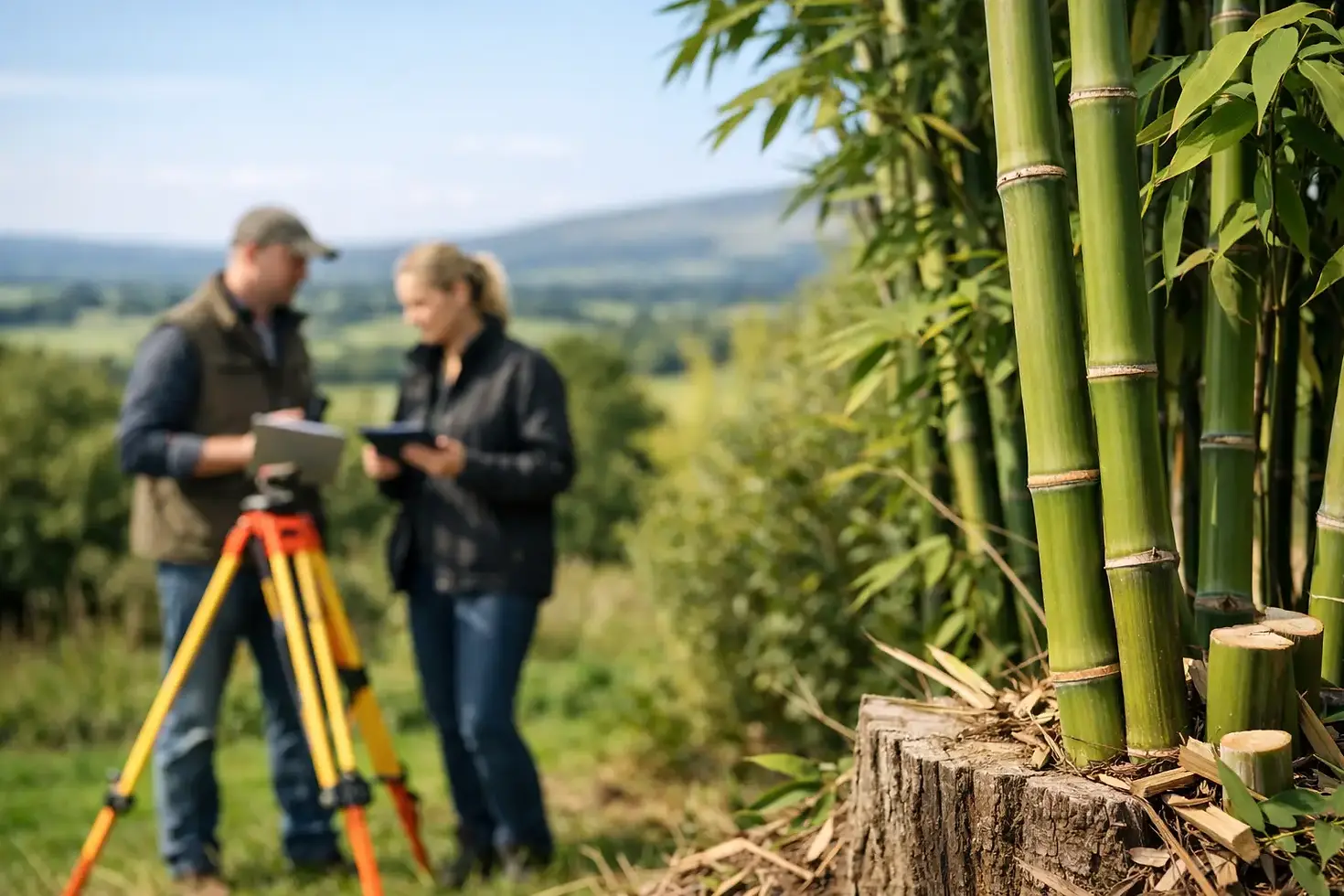
Bamboo Survey West Sussex for Fast Clarity

What looks like harmless bamboo can become a property problem very quickly. A Bamboo survey West Sussex gives you formal clarity before roots spread under fences, into neighbouring land, or start causing concern during a sale, purchase or tenancy issue.
For many owners, the real stress is not just the plant itself. It is the uncertainty. Is it clumping or running bamboo? Has it crossed a boundary? Is it likely to affect paving, beds, outbuildings or retaining features? A proper site survey answers those questions with evidence, measurements and a written record you can actually use.
Why a bamboo survey in West Sussex matters
Bamboo is often planted for screening, privacy and quick growth. The problem is that some species do not stay where they were first put. Running bamboo can spread aggressively through rhizomes below ground, appearing well beyond the original planting area and creating disputes between neighbours or concerns for buyers.
In West Sussex, where many properties have established gardens, close boundaries and a mix of older homes and newer developments, that spread can become expensive to deal with if it is left unchecked. What starts as a dense screen at the back of a garden can move into lawns, beds, patios and adjoining plots.
That is why a survey matters. It moves the issue from guesswork to documented fact. If you are buying, selling, managing or simply trying to protect your home, speed and evidence matter far more than assumptions.
What a Bamboo survey West Sussex should cover
A useful survey is not a quick glance over the fence. It should inspect the visible growth, likely spread pattern and the areas most at risk, including garden beds, hard standing, fence lines and neighbouring boundaries where encroachment may already be happening.
The strongest survey reports also include measured observations, site mapping and photographic evidence. That matters if you need to show a solicitor, surveyor, managing agent or neighbour what is present and where it sits in relation to boundaries and structures.
For property owners, the practical value is simple. You receive a clear written assessment of what has been found, how serious it appears, and what should happen next. If no further action is needed, that reassurance is valuable. If control or removal is required, you know exactly where you stand.
When to arrange a survey
The best time is usually as soon as you notice vigorous bamboo growth, fresh shoots appearing away from the original clump, or signs that the plant may be moving towards a boundary. Waiting for a dispute, a mortgage query or a buyer’s concern only narrows your options.
A survey is also sensible if bamboo has been flagged during a homebuyer inspection or if you have inherited a garden with mature planting and no clear history. Landlords and commercial site managers often need the same clarity, especially where unmanaged growth could affect neighbouring land or create ongoing maintenance complaints.
There are cases where bamboo is contained and lower risk. Clumping varieties behave differently from running types, and a well-managed planting with effective barriers may not require major intervention. But that is exactly why inspection matters. The right answer depends on the species, the spread and the site conditions, not on assumptions.
What happens after the survey
Once the survey is complete, the next step should be straightforward. You should receive a detailed written report quickly, with enough supporting evidence to make a decision without delay. For urgent property matters, speed is often just as important as accuracy.
A professional service-led approach will typically move from identification and site findings into a structured plan for control or removal if needed. That is especially useful where bamboo spread is affecting value, saleability or neighbour relations. Clear paperwork helps reduce uncertainty and gives everyone involved a documented basis for action.
Japanese Knotweed Group Ltd approaches invasive plant issues in exactly that way - fast surveying, formal reporting and practical next steps designed to protect property owners rather than leave them stuck with vague advice.
Choosing the right specialist
Not every contractor approaches bamboo as a property risk. Some treat it as a gardening job. That can be a mistake when boundaries, future sales or potential damage are involved. You need a specialist who understands inspection, documentation, safe removal planning and the importance of evidence that stands up when questions are asked later.
Look for clear deliverables. A written report, extensive photographs, mapped observations and measured site notes are far more useful than verbal reassurance. If treatment is needed, a structured plan is usually better than a one-off promise to "clear it". Long-term control often matters more than fast cosmetic cutting.
For buyers and sellers in particular, documentation is the difference between a manageable issue and a transaction headache. For landlords and site managers, it is part of showing that the problem was identified properly and handled with a clear plan.
If you are dealing with suspected spread, boundary concerns or a property transaction, a bamboo survey is the quickest way to replace uncertainty with evidence. Early action is usually cheaper, easier and far less stressful than dealing with the same problem once it has had another growing season to move.


Comments