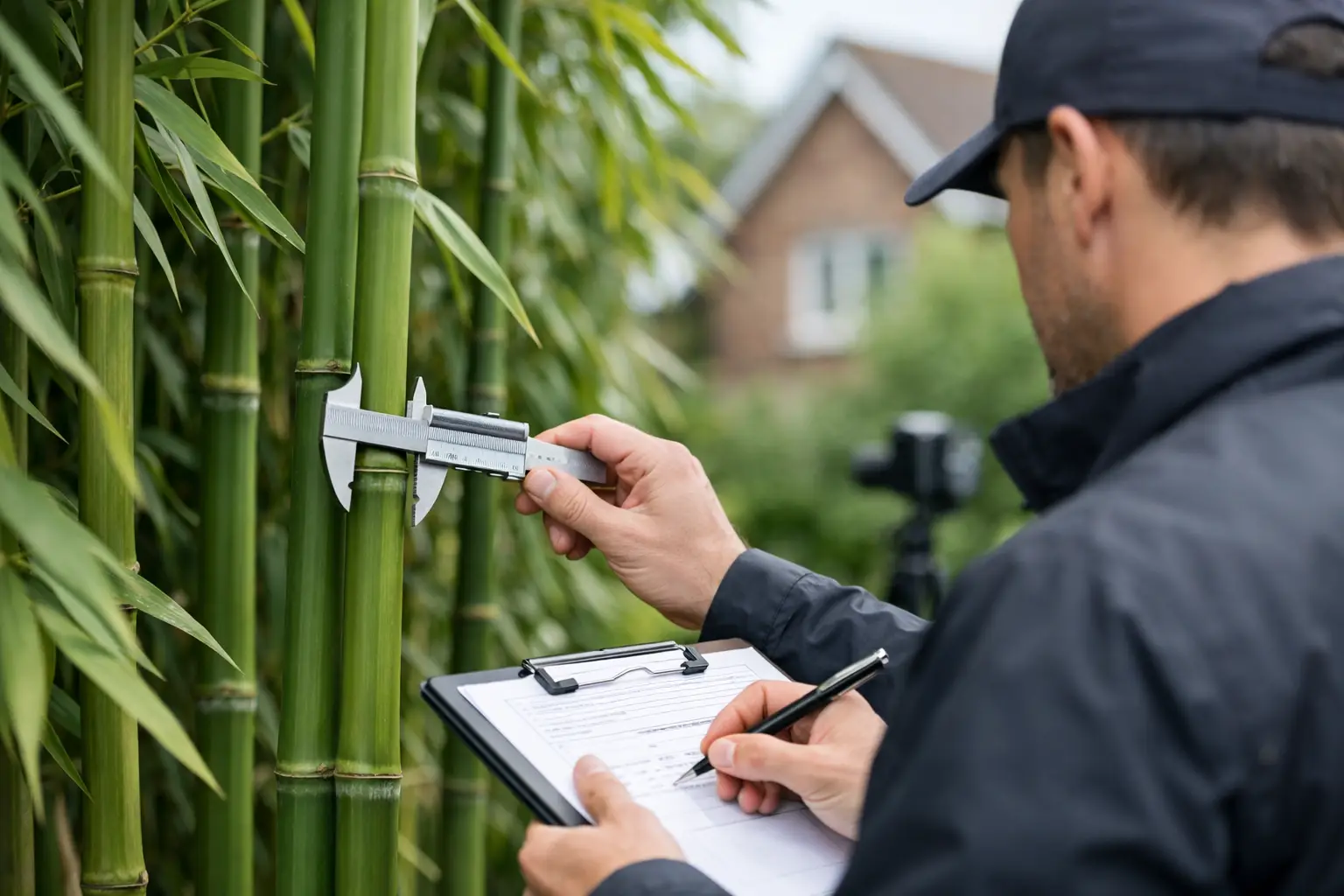
Bamboo Survey Guildford Surrey: What to Check

Bamboo near a boundary line can go from a minor nuisance to a property problem very quickly. If you are searching for a Bamboo survey Guildford Surrey, the real question is not simply whether the plant looks attractive or overgrown. It is whether the bamboo is spreading, whether it is likely to cross into neighbouring land, and whether you need formal evidence to protect a sale, purchase, tenancy, or ongoing asset value.
That distinction matters. Too many property owners are told that invasive growth is just a gardening issue, only to find later that dense rhizome spread, neighbour complaints, or surveyor concerns have turned it into something more serious. A proper survey gives you measured site observations, clear photographic evidence, mapped locations, and a written record of what is present and what should happen next.
Why a bamboo survey matters in Guildford Surrey
Guildford has a broad mix of property types - established family homes, managed developments, rental stock, commercial sites, and properties with mature gardens that back onto neighbouring plots, embankments, or shared access routes. Bamboo often thrives in exactly these settings because it has been planted deliberately for privacy or screening, then left unmanaged for years.
The risk is not the same on every site. Some clumping varieties stay relatively contained. Running bamboo is different. It can spread underground through rhizomes, appear some distance from the parent plant, and create disputes where boundaries are tight and responsibility is unclear. If you are selling or buying, uncertainty is the problem. If you manage property, lack of documentation is the problem.
A formal bamboo survey helps replace guesswork with evidence. That is especially valuable when timing matters and you need a defensible record rather than an informal opinion from a general gardener.
What a Bamboo survey Guildford Surrey should include
Not all surveys are equal. If a contractor walks around, gives a verbal view, and leaves you with no measurements, no mapped observations, and no photographic record, you are still exposed. For a property risk issue, you need something structured.
A credible survey should inspect the visible growth itself, but it should also assess the surrounding site conditions. That includes gardens, planted beds, boundary edges, hardstanding transitions, fence lines, and any nearby areas where spread may already be occurring out of sight of the original planting position. Neighbouring fence lines matter because that is often where disputes begin.
The written report should set out what has been found, where it is located, and how extensive the issue appears to be based on measured observations. Photographs are not a cosmetic extra. They create a dated visual record that can support decision-making, conversations with buyers or neighbours, and future treatment planning. Mapping is equally important because it shows the relationship between the plant growth and boundaries, structures, and access points.
For many owners, speed matters almost as much as accuracy. If a transaction is already moving, waiting days for paperwork can create unnecessary delay. That is why next-day reporting can make a meaningful difference.
The main risks property owners often miss
The first missed risk is assuming that all bamboo behaves in the same way. It does not. Some growth patterns are more aggressive than others, and the visible top growth rarely tells the full story underground. A plant that looks tidy above ground can still be extending beyond where the owner believes it to be.
The second is treating the issue too casually because no visible damage has occurred yet. By the time complaints arise, the spread may already be established under lawns, close to paving, or across a boundary. Early intervention is usually simpler and easier to document.
The third is relying on a one-line identification without any supporting evidence. If you later need to show what was present on a certain date, or prove that steps were taken to manage the issue, a vague note is not much use.
There is also the practical problem of disposal. Cutting back bamboo is not the same as solving a bamboo problem. Disturbed material and rhizome waste need to be handled properly. Otherwise, you may simply move the issue from one part of the site to another.
When to book a survey instead of waiting
If bamboo is close to a boundary, visible in more than one area, appearing in places where it was not planted, or becoming part of a neighbour disagreement, waiting is rarely helpful. The same applies if a valuer, buyer, solicitor, or surveyor has raised a question and you need formal confirmation of the situation.
Landlords and managing agents should also move early. Once a tenant reports encroachment, the issue has already entered a record trail. At that point, having a professional site survey and written report is the clearest way to show that the matter is being handled properly.
Commercial sites face a slightly different pressure. There, unchecked growth can affect maintenance access, boundaries, landscaping responsibilities, and site presentation. The need is less about plant curiosity and more about control, compliance, and documented action.
What happens after the survey
A survey is the first step, not the whole answer. Once the findings are clear, the next question is whether the bamboo can be managed through monitoring, requires structured treatment, or needs more extensive control measures because spread is already established.
This is where many owners benefit from a service that does not stop at identification. A useful survey process should move naturally into a practical recommendation, with enough detail for you to act decisively. That may involve a staged treatment plan, advice on containment, or a professional removal strategy where appropriate.
For property owners under pressure, clarity matters more than technical jargon. You need to know what is there, how serious it is, what should happen next, and what documentation you will have to support that decision.
Why documentation matters for sales, purchases, and disputes
Property problems become more expensive when they are poorly recorded. If bamboo is raised during conveyancing or by a buyer’s surveyor, you need more than reassurance. You need evidence. A documented survey can help establish the extent of the issue at the time of inspection and show that the owner has taken professional advice.
That same principle applies to neighbour matters. Boundary complaints are often driven by uncertainty as much as by the plant itself. A measured, photographic report gives everyone a clearer starting point. It does not remove every disagreement, but it helps replace opinion with facts.
For buyers, a formal survey can also prevent a bad assumption in either direction. Sometimes the growth is less severe than feared. Sometimes it is more extensive than the seller realises. In both cases, a proper inspection supports a cleaner decision.
Choosing the right specialist in Guildford Surrey
A bamboo issue should not be treated as a routine garden tidy-up if the plant is spreading or affecting a transaction. The right specialist will approach the site as a property risk matter. That means structured inspection, written findings, site measurements, clear imagery, and practical next steps.
It also means understanding urgency. Owners are often dealing with stress, uncertainty, and time-sensitive decisions. Slow reporting or vague advice adds to that pressure. Fast paperwork, formal evidence, and a route into treatment planning are what give people peace of mind.
Japanese Knotweed Group Ltd follows that service model because property owners need more than a quick opinion. They need a survey product that creates a clear record, supported by photographs, mapping, and measured observations, with a pathway into longer-term treatment where required.
What to have ready before your survey
You do not need specialist knowledge before booking, but it helps to gather a few practical details. If you know when the bamboo was planted, when spread was first noticed, or whether a neighbour has already raised concerns, that context can be useful. Photos taken over time can also help show whether the growth is stable or expanding.
Try to make all affected areas accessible, including side returns, rear fences, planted beds, and any sections where shoots have appeared away from the main clump. If there are previous reports, estate agent notes, or conveyancing queries, have those available as well. The more clearly the issue can be tied to the property decision in front of you, the more useful the survey becomes.
The key point is simple. If bamboo on your site in Guildford is raising questions, do not settle for guesswork or a verbal opinion. A proper survey gives you evidence, direction, and a basis for action while the problem is still manageable.


Comments