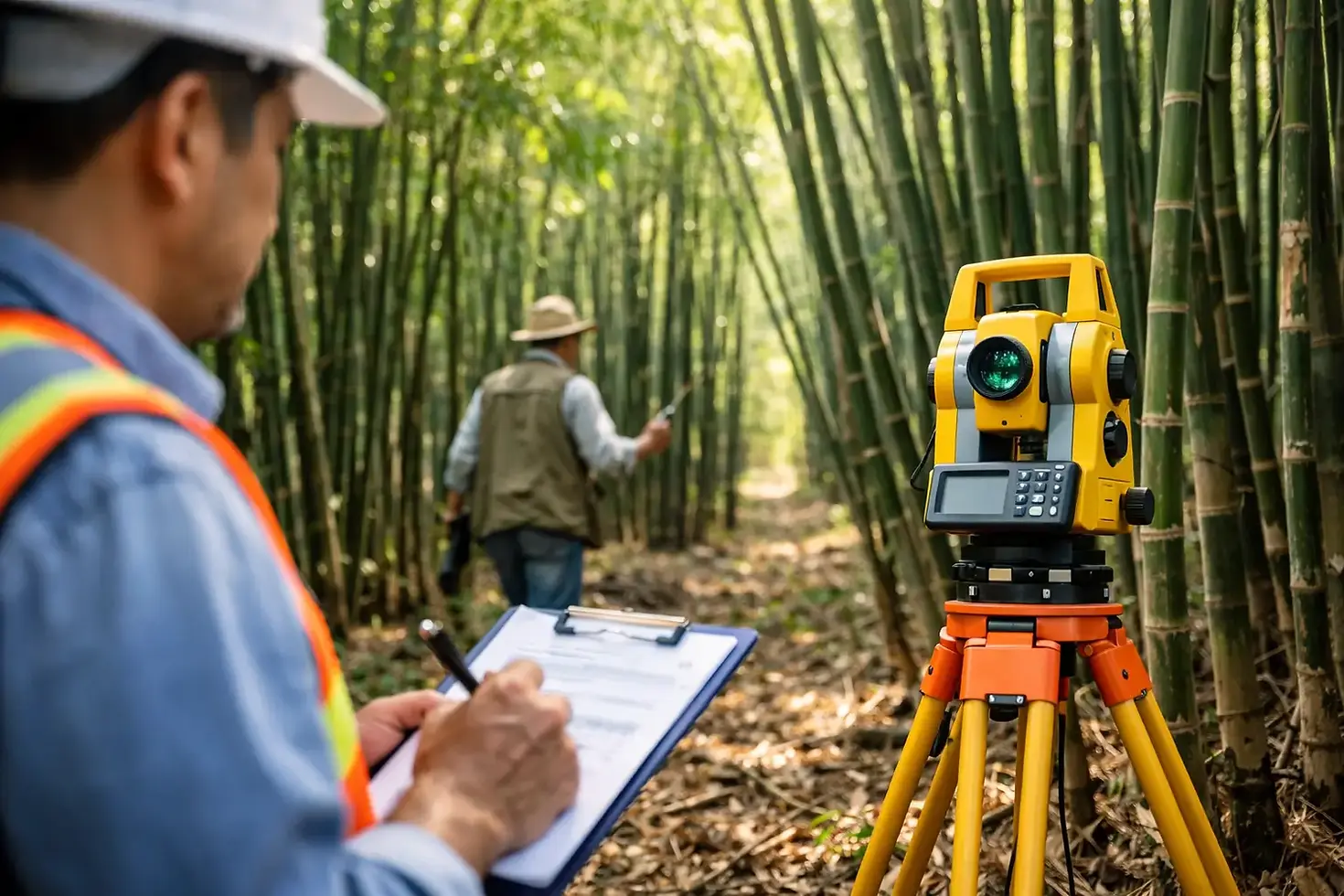
Bamboo Survey for Property Risk Checks

If you have fast-growing canes near a boundary, outbuilding or garden structure, a Bamboo survey gives you something far more useful than guesswork - measured evidence. That matters when growth is spreading into neighbouring land, lifting surfaces, or raising questions during a sale.
Bamboo is often dismissed as a gardening nuisance. In reality, unmanaged clumping or running bamboo can become a property issue. Rhizomes may travel beneath fences, patios and beds, leading to disputes, expensive clearance work and concern from buyers who want formal confirmation of the extent of spread.
What a Bamboo survey should cover
A proper survey needs to do more than confirm that bamboo is present. It should record where it is growing, how far it has spread, whether rhizomes are visible or suspected beyond the main stand, and which parts of the site are at risk. That includes beds, lawns, boundary lines, neighbouring fence lines and any area where underground spread could affect hard surfaces or adjoining property.
Clear documentation is the difference between a useful inspection and an informal opinion. A written report, site measurements, mapping and photographic evidence create a practical record you can act on. For owners, landlords and buyers, that provides a clear basis for removal, containment or ongoing management.
When to book a bamboo survey
The right time is usually sooner than people think. If shoots are appearing away from the original planting area, if a neighbour has raised a complaint, or if a transaction is approaching, delay rarely helps. Bamboo can expand quietly below ground before new growth becomes obvious on the surface.
A survey is also sensible if you are unsure whether the plant is bamboo at all. Misidentification is common, and the wrong response can waste time while the problem spreads.
What happens after the survey
Once the site has been inspected, the next step should be straightforward. You need a report that sets out the findings clearly and explains the recommended response. In some cases, that may mean targeted removal and safe disposal. In others, it may require a structured treatment and monitoring plan where spread is more established.
For property-related issues, speed matters. Formal paperwork, photographs and mapped observations help support decisions quickly, especially where value, liability or a pending sale is involved. That is why Japanese Knotweed Group Ltd focuses on rapid surveying, next-day reporting and practical follow-up action rather than vague advice.
If bamboo is starting to affect your land, the priority is simple: confirm the extent, document the risk, and deal with it before it becomes a larger boundary or property problem.


Comments