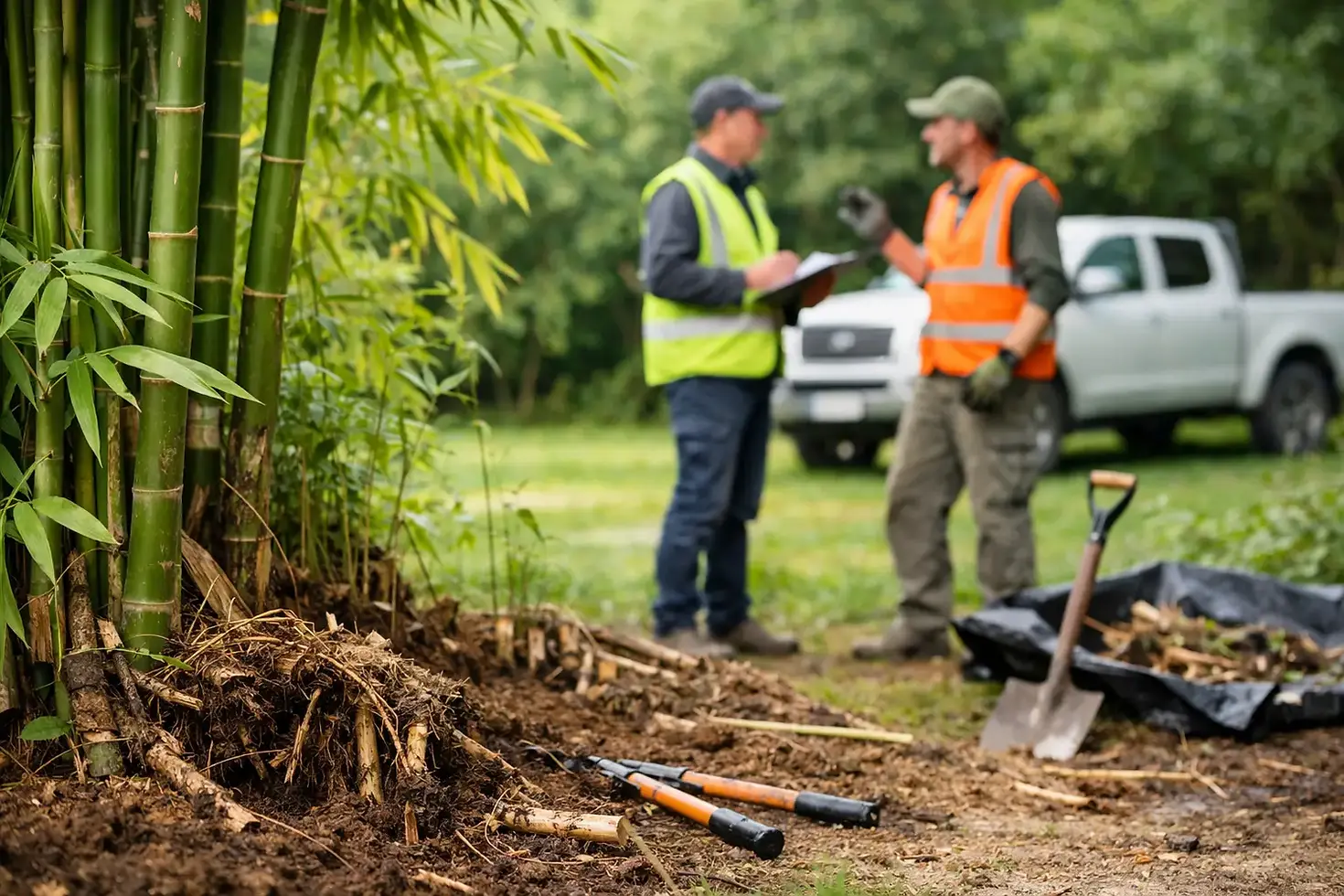
Bamboo Survey and Treatment Plan Kent

If bamboo is creeping under a fence, pushing into beds, or spreading further than expected, waiting rarely helps. A Bamboo Survey and Treatment Plan Kent, Bamboo survey Kent, Kent is the sensible first step when you need clear evidence, measured site findings, and a proper route to control before the problem affects neighbours, saleability, or future costs.
Bamboo is often treated as a gardening nuisance until it starts crossing boundaries or reappearing where it should not. At that point, guesswork becomes expensive. For homeowners, buyers, landlords, and property managers, the issue is not simply whether bamboo looks untidy. The real question is how far it has spread, what risk it poses to the property, and what formal action should happen next.
Why a bamboo survey matters before any treatment starts
A bamboo problem can look smaller on the surface than it is underground. Dense top growth may suggest one clump, while the rhizome network below tells a different story. Cutting it back without understanding the spread often gives a false sense of progress. In many cases, it simply returns.
That is why a bamboo survey in Kent should come before removal advice, pricing, or promises about treatment timescales. A proper survey creates a record of what is present on site and where it sits in relation to gardens, hardstanding, beds, outbuildings, and boundary lines. It also gives property owners something far more useful than informal opinion - documented findings that support next steps.
This matters even more where there is a sale, purchase, neighbour concern, or an ongoing dispute about the source and spread of bamboo. If you need decisions to stand up under scrutiny, a verbal assessment is not enough.
What a bamboo survey in Kent should include
A useful survey is not just a quick visit and a short note. It should be structured, specific, and easy for a homeowner or property professional to act on.
For most sites, that means inspecting visible growth, identifying likely spread patterns, assessing the surrounding area, and recording the relationship between the bamboo and key parts of the property. Gardens and planting beds matter, but so do fence lines, neighbouring boundaries, access routes, and any area where rhizomes may have travelled beyond the obvious growth.
A formal report should also include photographic evidence, mapping, and measured observations. These details are important because they turn concern into something concrete. Once the extent is documented, treatment planning becomes more reliable.
At Japanese Knotweed Group Ltd, the survey product is designed around that need for clarity. From £199 + VAT, it provides a detailed written report, 20 photographs, mapping, and measured site observations, with next-day paperwork available. For a property owner trying to keep a transaction moving or prevent a boundary issue from escalating, speed and documentation are not extras. They are the service.
The difference between a survey and a treatment plan
People often ask for bamboo removal when what they actually need first is a survey. The distinction matters.
A survey confirms what is present and how the issue affects the site. A treatment plan then sets out how control or removal should be managed over time. Without the survey stage, treatment recommendations can be too general and sometimes wrong for the property.
Some bamboo cases are contained and relatively straightforward. Others involve spread into neighbouring land, repeat regrowth, awkward access, or roots and rhizomes close to structures and hard landscaping. In those situations, the right treatment approach depends on evidence collected on site, not assumptions made over the phone.
If you want a more detailed view of why the reporting stage comes first, this explains it clearly: Why a Knotweed Survey Comes First. The same logic applies to bamboo when the concern is property risk rather than routine garden maintenance.
What a bamboo treatment plan should achieve
A treatment plan should do more than say bamboo will be dealt with. It should set out a realistic management route based on the spread recorded during the survey.
For some properties, that may mean a longer-term control programme. For others, a more intensive removal strategy may be appropriate. The right answer depends on the size of the infestation, where it is located, whether it has crossed boundaries, and how quickly the owner needs the risk reduced.
What matters is that the plan is structured and documented. Property owners need to know what will happen, how progress will be monitored, and what evidence will exist at the end of the process. Where there is a sale or remortgage in the background, that clarity can make a practical difference.
A multi-year plan is often the most responsible option for invasive growth because short-term cutting or one-off visits rarely resolve the underlying issue. A formal treatment route backed by ongoing management gives owners a better chance of regaining control without creating false confidence.
Bamboo survey Kent - what property owners are really trying to avoid
Most clients do not call because bamboo is slightly inconvenient. They call because the situation has started to feel risky.
Sometimes that risk is financial. A buyer notices bamboo near a boundary and asks questions. A seller worries the issue will derail conveyancing. A landlord wants to deal with it before a complaint becomes a dispute. In commercial settings, the concern is often asset protection, site presentation, and preventing a manageable problem from becoming a larger remediation cost.
Sometimes the risk is physical. Bamboo can spread aggressively, affect neighbouring areas, and become difficult to control if left unchecked. Not every stand of bamboo causes the same level of concern, and not every case needs the same remedy. But once spread is visible beyond its original planting area, the safest approach is to have it inspected properly.
A fast survey gives you a factual baseline. From there, decisions become clearer.
When speed matters most
Kent property owners often contact specialists when time is already tight. A viewing is booked. Solicitors have raised enquiries. A neighbour has complained. A buyer has become hesitant.
In those moments, waiting weeks for paperwork is rarely acceptable. Formal reports, photographs, mapping, and measured observations help move matters forward because they replace uncertainty with evidence. Next-day survey reporting can be the difference between a problem being managed calmly and a problem gathering pressure.
This is also why specialist handling is different from general gardening services. If the concern touches value, compliance, or a transaction, the work needs to be documented in a way that supports decisions. It is not just about cutting back growth. It is about risk control.
Bamboo or something else?
One reason surveys are so important is that invasive growth is not always identified correctly. Bamboo is sometimes mistaken for other species, and Japanese knotweed is a common point of confusion. The treatment route for each can be very different, so getting the identification right at the start is essential.
If you are unsure what you are seeing, this may help: Bamboo or Japanese Knotweed?. Where there is any doubt, a site inspection is the safer option than relying on internet comparisons or well-meaning advice.
What buyers, sellers and landlords should do next
If bamboo is present, suspected, or already causing concern, the next step should be proportionate and documented. That usually means booking a survey before discussing treatment in detail.
For sellers, that creates a paper trail and shows that the issue is being handled professionally. For buyers, it provides clarity before committing to a property with unknown spread. For landlords and managing agents, it supports responsible management and demonstrates that the issue is not being ignored.
Where treatment is required, a longer-term plan with clear reporting and meaningful reassurance carries more weight than informal promises. That is especially true when future buyers, lenders, surveyors, or neighbours may ask what was done and when.
If you are specifically dealing with a sale, this is also worth reading: Selling a House With Bamboo? Do This First. It covers the practical importance of getting evidence and a treatment route in place early.
Choosing a specialist for a Bamboo Survey and Treatment Plan Kent
The right provider should give you more than a site visit. You should expect a clear process, a defined deliverable, and treatment planning that reflects the real condition of the site.
That means formal reporting, photographic evidence, measurements, and mapping. It means understanding what sits within your boundary and what may affect adjoining land. It also means having a route from survey to treatment that is structured enough to provide reassurance, not just advice.
For property owners in Kent, the goal is simple. You want to know what is there, how serious it is, and what should happen next. Once you have that, the stress usually starts to reduce because the problem has moved from uncertainty into a managed process.
If bamboo is already affecting the use, value, or marketability of a property, the best time to get that process started is now, before another growing season or another property enquiry makes the issue harder to contain.


Comments