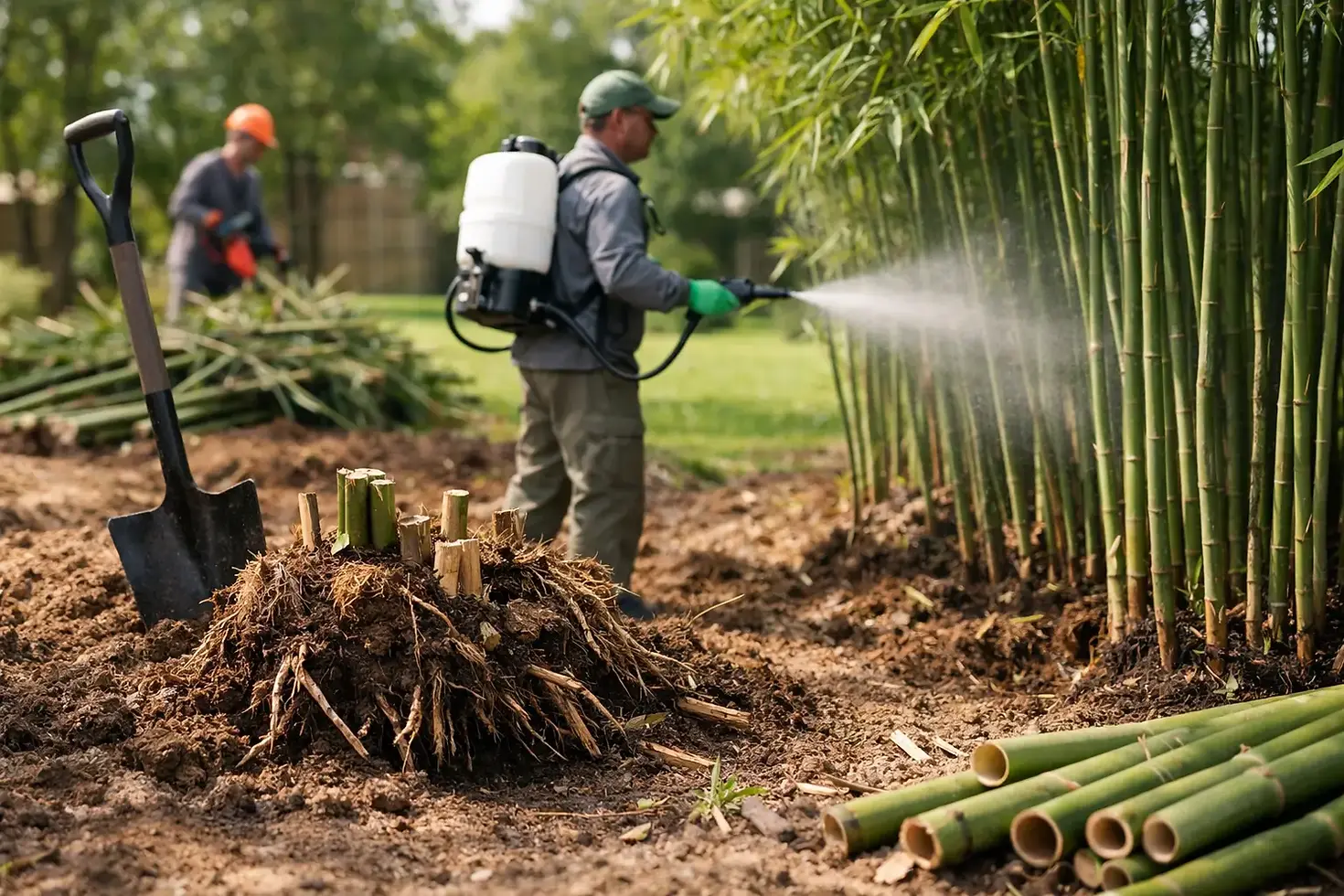
Bamboo Removal, Treatment Plan and Guarantee

Left untreated, running bamboo can move well beyond the spot where it was first planted. It can spread under fences, push into neighbouring land and keep returning after poor-quality clearance. That is why bamboo removal, Bamboo treatment plan, bamboo guarantee matters far more than a quick cut-back. If bamboo is affecting your property, or a sale is depending on clear evidence that the risk is being managed, you need more than garden maintenance. You need a documented process.
For many property owners, the first sign of trouble is not dramatic. It might be fresh shoots appearing metres away from the original clump, rhizomes turning up near a boundary line, or a buyer raising questions during conveyancing. By that stage, the issue is no longer cosmetic. It becomes a matter of control, documentation and confidence that the problem will not return.
Why bamboo removal needs a formal plan
Bamboo is often underestimated because it starts as an attractive screening plant. The problem is that some species, especially running bamboo, spread through underground rhizomes that are difficult to remove fully without a proper site assessment. Cutting canes down will not solve that. Neither will digging out a small visible area if the rhizome network extends beneath patios, lawns, outbuildings or adjoining ground.
A formal treatment approach matters for two reasons. First, the practical one: partial removal frequently leads to regrowth. Secondly, the property one: if bamboo has spread near structures or boundaries, verbal reassurance is rarely enough for buyers, lenders or managing agents. They want evidence of what was found, how extensive it is, and what will be done next.
That is why a specialist survey is the starting point. Before any treatment begins, the extent of the bamboo needs to be measured and recorded properly. A professional report should cover the affected garden areas, planted beds, visible canes, likely spread pattern, boundary lines and neighbouring fence lines where encroachment risk may exist. Good reporting also includes clear photography and mapping, because treatment decisions should be based on what is actually on site rather than guesswork.
What a bamboo survey should include before removal
When bamboo is affecting a residential or commercial property, a survey should do more than confirm that bamboo is present. It should define the problem in a way that supports action.
That means identifying whether the growth is likely to be clumping or running bamboo, recording the visible footprint, noting signs of rhizome spread, and measuring distances to boundaries and built features. It should also assess whether there is evidence of movement into adjacent land, because that can quickly turn a site issue into a neighbour dispute.
For owners preparing a sale or purchase, documentation speed matters as well. Delayed paperwork can hold up decisions and increase uncertainty. A structured survey with next-day reporting is often the difference between a manageable issue and a transaction drifting into avoidable delay.
In practical terms, the most useful report is one that gives you photographs, mapped areas, measured observations and a clear recommendation on the next step. That recommendation may be excavation and removal, a phased treatment plan, or a combination of both depending on the extent of spread and the constraints of the site.
Bamboo removal is not always one visit
This is where expectations need to be realistic. Some bamboo infestations can be removed through excavation if the affected area is accessible and the rhizome spread is limited. Others require staged treatment because the root network is extensive, access is restricted, or immediate excavation would create unnecessary disruption.
A responsible specialist should explain that trade-off clearly. Full excavation can be effective, but it may involve disturbance to lawns, beds, paths or other landscaped areas. A treatment-led approach can reduce immediate disruption, but it requires monitoring and repeat visits to deal with regrowth as the underground network is brought under control.
The right answer depends on the site, not on what sounds quickest. For example, bamboo close to a simple open garden border may be a good candidate for more direct removal. Bamboo that has spread near hard landscaping, retaining structures or shared boundaries may need a more controlled plan with careful disposal and follow-up.
This is one reason formal site observations matter so much. A treatment plan should reflect what is physically possible on the property, what level of disruption is acceptable, and whether the owner needs documentary reassurance for a sale, purchase or ongoing management file.
What a proper bamboo treatment plan looks like
A bamboo treatment plan should be structured, time-based and easy to understand. If it reads like a vague promise to keep an eye on things, it is not enough.
At minimum, the plan should set out the treatment method, the expected programme length, what signs of progress look like, and what happens if regrowth appears between visits. It should also confirm how waste will be handled. Safe disposal is not an afterthought. If removed material or rhizome fragments are mishandled, the problem can be moved rather than solved.
For many sites, a multi-year programme is the most credible route. That may sound cautious, but it reflects the nature of bamboo spread. Underground rhizomes can persist beyond the visible growth phase, and what appears clear after the first works may still require follow-up attention. A defined five-year treatment framework is often far more reassuring than a one-off visit with no continuing accountability.
That longer-term structure is particularly valuable for property owners who need proof that the risk is under active control. A buyer is more likely to take comfort from a written programme with scheduled treatment than from an informal statement that the bamboo was "dealt with" last summer.
Why a bamboo guarantee matters
A bamboo guarantee is really about confidence and accountability. If a specialist is willing to stand behind the treatment with a defined guarantee, it shows that the work has been designed as a managed remediation process rather than a quick clearance job.
Not all guarantees carry the same weight. A vague company promise is not equivalent to an insurance-backed guarantee. Where property value, mortgage decisions or future saleability are involved, formal backing matters. It gives owners, buyers and professional advisers greater confidence that there is recourse if the contractor is no longer trading later on.
This is especially important in higher-stakes situations. If bamboo has been disclosed during a sale, the question is not only whether treatment has started. The question is whether the paperwork will satisfy the people reviewing the risk. A 10-year insurance-backed guarantee is often the strongest answer because it demonstrates a long view of the problem and provides reassurance beyond the initial treatment term.
The link between bamboo control and property transactions
Bamboo rarely becomes urgent because of appearance alone. Urgency usually arrives when the spread threatens value, boundaries or a live transaction.
Buyers want certainty. Sellers want a problem they can explain clearly and evidence they can hand over without delay. Landlords and managing agents want a documented record that shows they acted properly once the issue was identified. In each case, the core need is the same: a survey-led process backed by a treatment plan and guarantee.
That is why specialist invasive-plant services are different from ordinary landscaping. The objective is not simply to tidy the site. It is to reduce risk in a way that can be demonstrated on paper. Measured observations, mapped findings, photographic evidence and a defined programme all support that goal.
In areas such as London, Surrey, Kent, Essex and West Sussex, where property values and transaction pressures are often high, speed matters as much as technical quality. If the report arrives quickly and the next steps are clearly documented, owners can make decisions before uncertainty turns into delay.
What to do if you suspect bamboo spread
The worst option is usually to ignore it and hope winter die-back means the problem has gone away. The second worst is informal removal with no record of what was found. If bamboo is near a boundary, close to structures or already raising questions in a sale, the sensible next move is a site survey.
That gives you a baseline. Once the extent is recorded, you can decide whether excavation, staged treatment or ongoing monitoring is the best route. It also gives you something just as valuable as the physical work itself: evidence.
Japanese Knotweed Group Ltd approaches invasive-plant problems as property risks that need structured control, not casual gardening fixes. That distinction matters. The combination of formal survey reporting, clear treatment planning and an insurance-backed guarantee gives owners something they can rely on when the stakes are high.
If bamboo is spreading on your land, under a fence line or into the background of a sale, fast action is usually cheaper and less disruptive than waiting for the footprint to grow. The right time to put a plan in place is when the first signs appear, not when the paperwork starts asking questions.


Comments