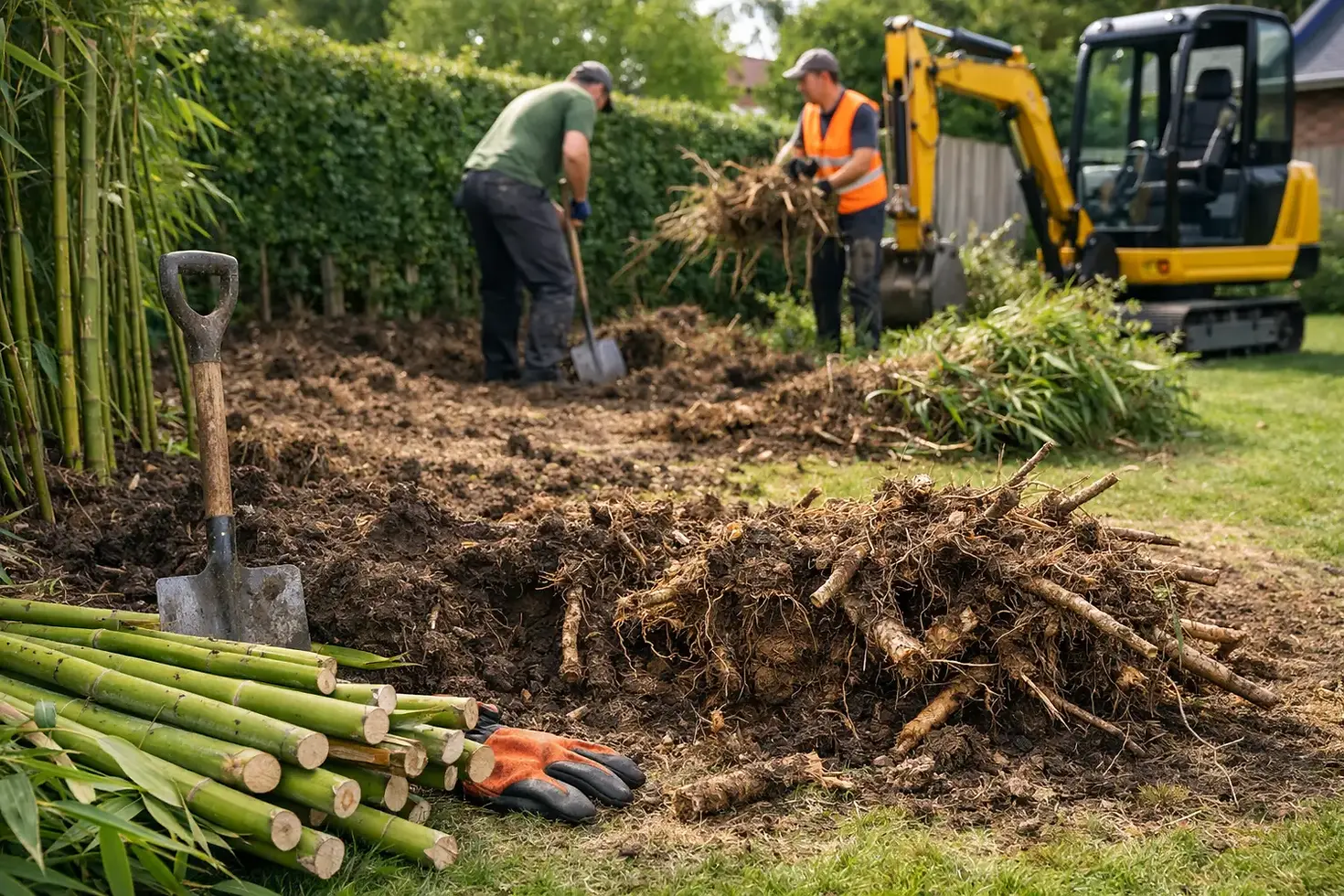
Bamboo Removal Essex: What Property Owners Need

Bamboo removal Essex enquiries often start the same way - a few canes at the back fence, fresh shoots appearing in the lawn, or a neighbour mentioning it has started to spread under the boundary. What looks tidy and ornamental can become a serious property issue when running bamboo moves beyond the area where it was first planted. Once it starts travelling, quick action matters.
Bamboo is not the same as Japanese knotweed, but it can still create costly problems for homeowners, landlords and site managers. Rhizomes can extend beneath patios, paths, lawns and fence lines, making removal more complex than cutting back visible growth. If you are buying, selling or managing a property, the real concern is not just how it looks. It is whether the spread has been properly assessed, documented and dealt with before it affects value, boundaries or future works.
When bamboo becomes more than a gardening job
The main issue with bamboo is hidden growth. Surface canes are only part of the picture. The underground rhizome network is what drives regrowth and spread, particularly with running varieties. A patch that seems contained in spring can appear in several new locations by summer.
This is where many DIY efforts go wrong. Cutting canes down may make the area look better for a short time, but it rarely solves the underlying problem. In some cases, disturbed rhizomes can make the spread harder to track. Digging can also be disruptive, especially near outbuildings, paving, retaining walls and shared boundaries.
For property owners, there is also the question of evidence. If bamboo has crossed a fence line or caused a dispute with a neighbour, informal removal attempts do not provide much reassurance. A clear site assessment, measured observations and photographic records are far more useful when decisions need to be made quickly.
Bamboo removal in Essex: why assessment comes first
Not every bamboo problem needs the same approach. Some clumps are genuinely manageable. Others have already spread into adjoining land, under hardstanding or close to structures. The right starting point is to establish the extent of the growth before any treatment or excavation begins.
A proper site survey should look at the visible growth, likely rhizome spread, nearby boundaries and any affected features such as patios, garden beds, driveways and fence lines. For buyers and sellers, this level of detail matters because vague descriptions are rarely enough when a property transaction is under pressure.
That is why a formal report is often more valuable than a quick opinion. Good documentation should show exactly what was found, where it sits on the plot, how far it may have spread and what the next step should be. When paperwork is produced promptly, property owners can move from uncertainty to a clear plan without delay.
Why removal needs to be controlled
Bamboo can be stubborn to remove fully because the rhizomes are dense, resilient and often buried deeper than expected. If only part of the system is taken out, regrowth is common. If contaminated material is moved carelessly, the problem can simply be transferred elsewhere on site.
Controlled removal is about more than excavation. It means identifying the affected area properly, separating viable plant material, and disposing of waste in a way that does not create a fresh problem later. Where bamboo is close to boundaries, a careful approach also reduces the risk of conflict with neighbouring owners.
For commercial sites and managed blocks, there is an added compliance issue. Grounds teams may be able to cut back growth, but that does not provide the structured evidence many asset managers need. If the concern is future liability, reinstatement costs or tenant complaints, a specialist process is the safer option.
What a specialist process should give you
If bamboo is affecting a property, you need more than advice to "keep an eye on it". You need a documented route forward. In practical terms, that means inspection, evidence, mapping and a treatment or removal recommendation that fits the site.
For many owners, speed is just as important as technical accuracy. When a survey report arrives quickly and includes photographs, measured observations and clear findings, it becomes much easier to brief solicitors, buyers, managing agents or contractors. That is especially important where property value or timing is at stake.
A structured plan also helps avoid false economies. Paying for repeated cut-backs that never resolve the rhizome spread can cost more over time than dealing with the issue properly at the outset.
When to act now
You should not wait if bamboo is appearing in multiple parts of the garden, crossing a boundary, pushing through paving, or interfering with planned building works. The same applies if you are in the middle of a sale or purchase and need formal confirmation of the extent of the issue.
Japanese Knotweed Group Ltd works with property owners who need fast surveying, clear reporting and a defined treatment path where invasive growth is creating risk. That kind of specialist support is often the difference between a manageable issue and a drawn-out property problem.
If you are dealing with bamboo on a property in Essex, the safest next move is not another cut-back. It is getting the site assessed properly, with evidence you can rely on and a plan that addresses the root of the problem, not just the growth you can see.


Comments